We are making changes and apologize for any inconvenience. Thank you for your patience

Stratospheric balloon experiment by school students

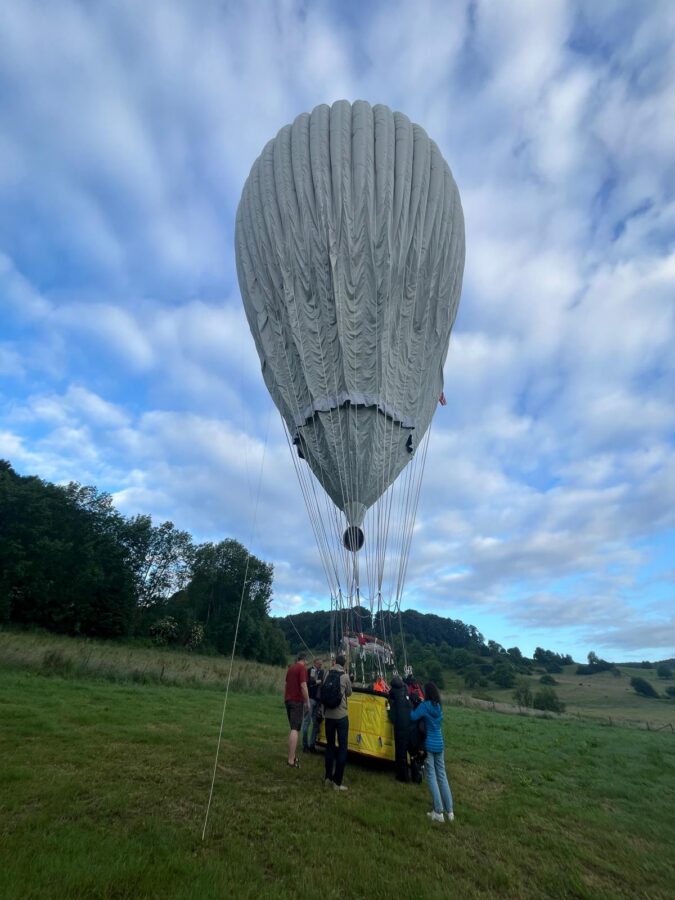
Junior high school students will take part in a stratospheric balloon experiment arranged by the Canadian Space Agency. This is historic as they become the youngest students to do so. The lightning probe payload will take temperature, humidity, and magnetic force and direction readings. It will also collect samples of certain gases at high altitudes.

Jamie Parkinson, a teacher at Wilfrid Laurier School, said that in addition to benefiting from getting real data from their experiments, students will gain valuable engineering, manufacturing, project management and logistics skills.

“They will also gain experience in managing teams and develop human resource skills that will help them in their future careers,” he said.

The Stratos Project began in 2013. Nine universities, five Canadian science firms, and 110 people have since participated. York University and Montreal’s École de technologie supérieure are also taking part in the Canadian program. The experiments will take about ten hours to complete and the balloons will fly at an altitude of 36 kilometers (23 miles).
Leave a Reply

Your email address will not be published. Required fields are marked *

Newsletter Sign Up
for Updates

[email-subscribers-form id="1"]

Explore More

Bill Costen Reflects on Four Decades in Ballooning

Print 🖨 PDF 📄From commercial ballooning and cross-country racing circuits to the Ed Yost Master Pilot Award and a basket now displayed at the Smithsonian, Bill Costen looks back on a ballooning career that began in 1975. William H. “Bill”

Crewed Hydrogen Balloon Pursues Historic Atlantic Crossing

Print 🖨 PDF 📄 Beneath a hydrogen balloon drifting high above the North Atlantic, three pilots share a small aluminum basket as they attempt one of the most challenging flights in modern ballooning—a crossing of the Atlantic Ocean from North

Victor Hess and the Discovery of Cosmic Rays

Print 🖨 PDF 📄In the early years of the twentieth century, physicists across Europe noticed something puzzling. Their sensitive instruments — electroscopes designed to detect ionizing radiation — kept registering a faint but persistent background signal, a steady level of

Get In Touch

Send a Message

Loremp Duis aute irure dolor in reprehenderit in voluptate velit esse cillum dolore eu fugiat nulla pariatu.

Call Us

Loremp aute irure dolor in reprehenderit in voluptate

General Inquiries: Have questions about the articles, advertising, or want to collaborate? Reach out below.