
Beneath a hydrogen balloon drifting high above the North Atlantic, three pilots share a small aluminum basket as they attempt one of the most challenging flights in modern ballooning—a crossing of the Atlantic Ocean from North America to Europe.
Following several weather delays caused by high winds at the launch site, Atlantic Explorer finally lifted off from Presque Isle, Maine, in the early hours of June 4, carrying balloon pilots Bert Padelt, Peter Cuneo, and Alicia Hempleman-Adams on what could become a landmark achievement in lighter-than-air aviation—the first manned transatlantic crossing in an open basket using hydrogen as the sole lifting gas.
Only 19 manned balloon crossings of the Atlantic have been completed since balloonists first began attempting the journey in the late nineteenth century. All of those successful flights relied on helium, hot air, or a combination of both in a Rozière balloon. Atlantic Explorer is attempting something different—the first transatlantic crossing using hydrogen as the sole lifting gas.
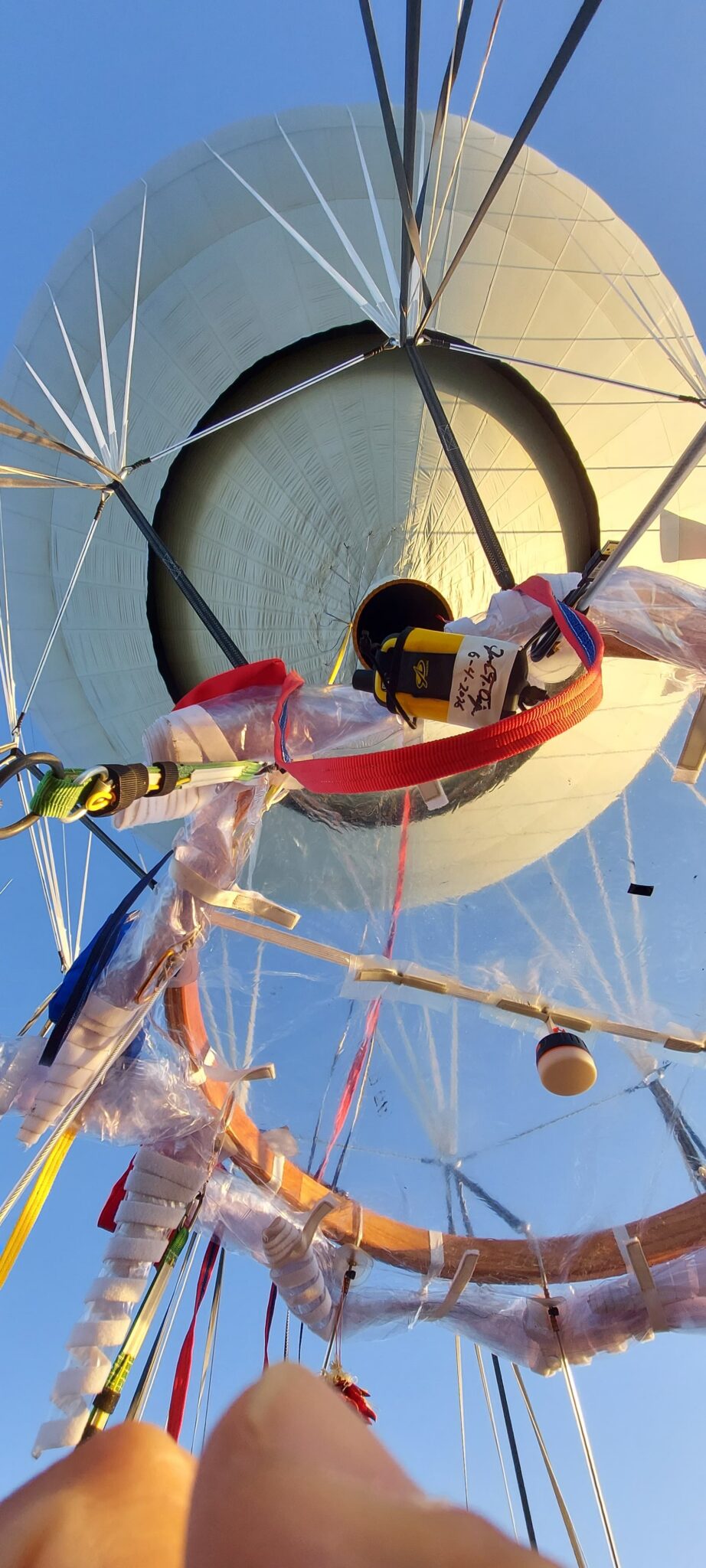
Photo credit: Bert Padelt
If successful, the flight could establish new world records for a hydrogen balloon of this type and size. It would also mark a historic milestone for Alicia Hempleman-Adams, who would become the first woman to complete a transoceanic gas-balloon crossing.
As of this writing, Atlantic Explorer had crossed much of the North Atlantic and was nearing the eastern half of its journey, near 50° 22.9′ N latitude and 25° 20.1′ W longitude. Riding easterly winds toward Europe, the balloon was traveling at 70.4 knots (81 mph) at an altitude of approximately 4,630 meters (15,190 feet), where the outside temperature was -8°C (18°F).
The Launch Challenge
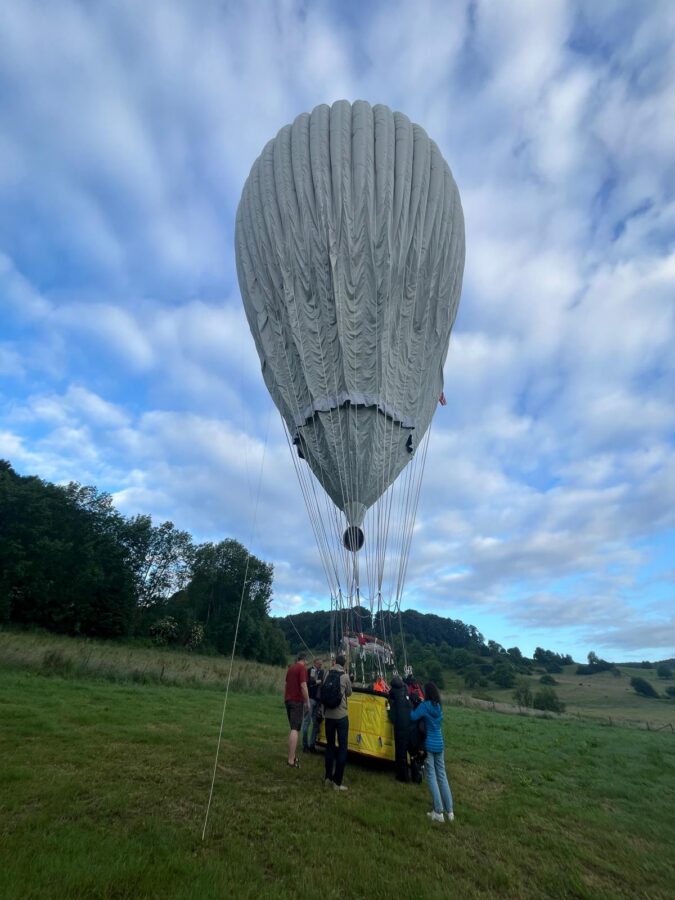
The night of June 3 into June 4 presented immediate obstacles. High winds at the launch site disrupted the inflation process repeatedly. The ground crew—including specialists from Latvia, New York, Pennsylvania, and New Mexico—had to pause and resume work through brief windows of calmer conditions.
“During three or four brief periods when the wind died, the team was able to move further down the inflation checklist,” according to Kim Vesely, the Atlantic Explorer’s press officer.
At 2:00 a.m. EDT on June 4 (0600 UTC), the pilots and crew recited the Balloonist Prayer, a tradition marking launches and landings. Minutes later, the balloon lifted into the darkness and established an eastward course.
Committing to the Atlantic
By midday on June 4, the balloon had crossed Nova Scotia. Hours later it passed Newfoundland and moved out over the open Atlantic Ocean.
For any transatlantic balloon flight, this marks a psychological turning point. Once beyond the coastline, landing options disappear, and the crew becomes fully committed to the crossing.
“There’s no turning back now,” Vesely noted in an update. “Atlantic Explorer has passed over the coast of Nova Scotia and is out over the open ocean. Pilots Bert Padelt, Peter Cuneo, and Alicia Hempleman-Adams have committed to completing their journey across the Atlantic Ocean to Europe.”
The challenge now is one of patience, strategy, and resource management. The pilots must carefully balance ballast consumption and gas management while seeking favorable wind currents that can accelerate their progress without shortening the balloon’s endurance.
According to the team, the balloon has already covered hundreds of miles of its approximately 3,100-to-3,500-mile journey. Depending on weather conditions, the crossing is expected to take four to six days.
The international crew reflects the collaborative nature of the project. American balloonists Bert Padelt of Pennsylvania and Peter Cuneo of New Mexico are joined by British explorer Alicia Hempleman-Adams. Flight operations are coordinated from the United Kingdom, while meteorological, technical, and logistical support comes from both sides of the Atlantic.

Life Beneath a Hydrogen Balloon
Unlike pilots aboard modern aircraft, the crew of Atlantic Explorer has no cockpit, no cabin, and little protection from the elements.
Their home for the duration of the flight is an exposed aluminum basket measuring just 5 feet by 6.5 feet (1.5 by 2 meters) and weighing about 150 pounds. Suspended beneath a 90,000-cubic-foot (2,549-cubic-meter) hydrogen balloon—about two and a half times larger than the balloons typically used in Gordon Bennett and America’s Challenge competitions—the basket carries the three pilots, their equipment, approximately 3,600 pounds of sand ballast, and 26 gallons of drinking water. Like traditional gas balloons, Atlantic Explorer is controlled by releasing ballast to climb and venting small amounts of hydrogen through a valve at the top of the envelope to descend.
For days at a time, the crew must live, navigate, eat, and sleep in the open basket while relying on weather forecasts, careful resource management, and favorable winds to carry them toward Europe.
Yet moments of routine still emerge.
In one update posted from altitude, a pilot wrote:
“Good morning from 13,260 ft over the Atlantic Ocean! It’s time for breakfast above the clouds with the balloon stable and flying at a speed of 50 knots.”
The Balloon Pilots

Photo credit: Peter Cuneo
For Bert Padelt, Peter Cuneo, and Alicia Hempleman-Adams, the Atlantic crossing represents more than a record attempt. It is the result of years—and in some cases decades—spent pursuing ballooning adventures around the world.
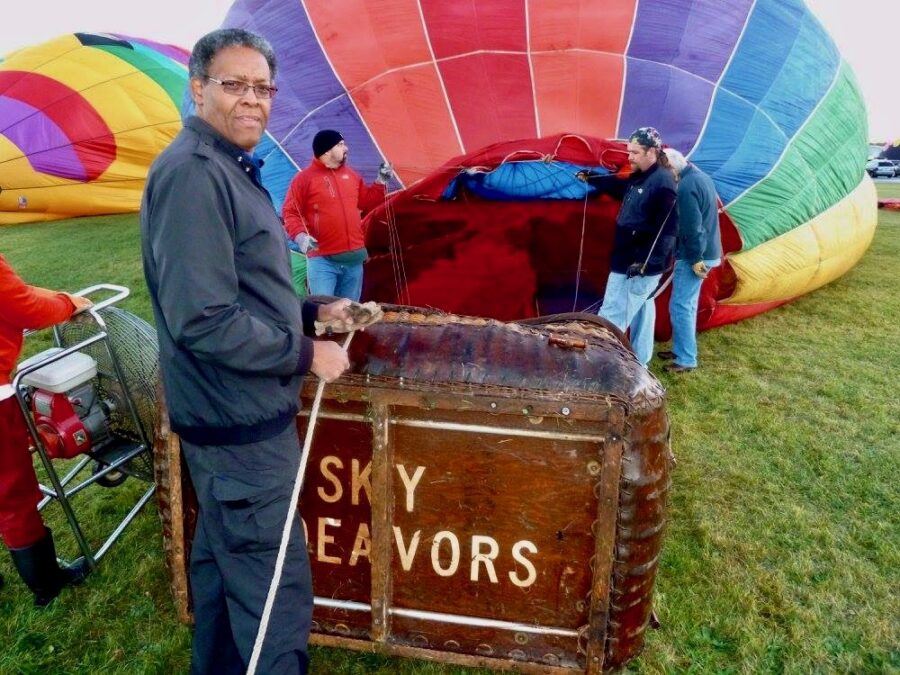
Padelt, a master gas-balloon builder and pilot from Pennsylvania, has devoted much of his life to the sport. Together with his wife Joanie, he owns and operates Best Aviation, a balloon manufacturing and repair company. Although he has supported numerous long-distance and record-setting flights, Atlantic Explorer offers him the opportunity to lead one of his own most ambitious expeditions.
Cuneo, an engineer and champion balloon pilot from Albuquerque, New Mexico, is equally experienced in both flight and flight support operations. Over the years, he has crossed the North Sea, three of North America’s Great Lakes, and mountain ranges including the Rockies and the Swiss Alps. Like Padelt, he has spent much of his ballooning career helping others achieve challenging aerial goals.
The youngest member of the team, Alicia Hempleman-Adams of London, England, already holds several ballooning distance and duration records. The daughter of British explorer Sir David Hempleman-Adams, she has built an impressive aeronautical résumé of her own and represents a new generation of long-distance balloonists.
Persistence, Preparation, and the Pursuit of a Dream
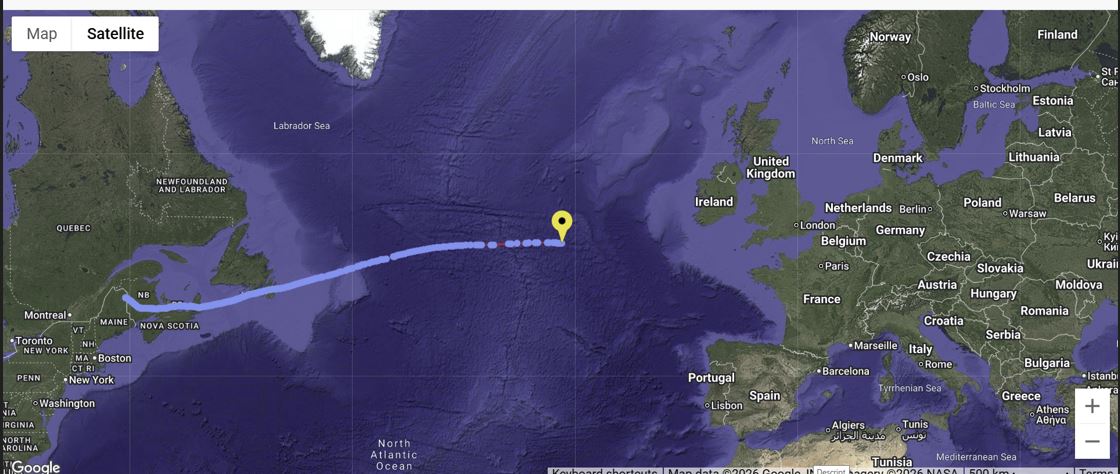
Source: Atlantic Explorer Flight Control
The current flight represents the culmination of four years of planning, preparation, and perseverance. In recognition of the many people who helped bring the project to launch, Bert Padelt invited members of the support team to sign a panel of the balloon during the final stages of preparation.
For balloonists, however, the value of such flights is not measured solely by records.
As the team wrote on its Facebook page:
“For balloonists, the true reward has never been the record books. It’s the adventure, the preparation, the friendships forged, and the willingness to pursue a dream that seems just beyond reach.”
For now, three pilots continue eastward beneath a hydrogen balloon, alone with the wind above the vast North Atlantic, pursuing one of aviation’s oldest and most demanding dreams.
LTA – Science & Flight Magazine joins the community in wishing the crew favorable winds, a safe crossing, and a successful landing.
Live tracking and updates are available on the team’s website at atlantic-explorer.com and their Facebook page, Atlantic Explorer 2026 Flight Control.


One Response
Absolutely phenomenal, mental and inspiring at the same time a challenge that will be life changing and inspirational to all balloonists, I can’t wait to here all craic about the crossing, safe flying n a soft landing