

While winter is upon us here, it’s summertime in Antarctica—time for NASA’s globetrotting balloon team to launch their scientific balloons, during this period, when anticyclones form in Antarctica.
An anticyclone is a weather phenomenon characterized by high atmospheric pressure at its center, around which air slowly circulates in a counterclockwise pattern in the southern hemisphere (clockwise in the northern hemisphere).
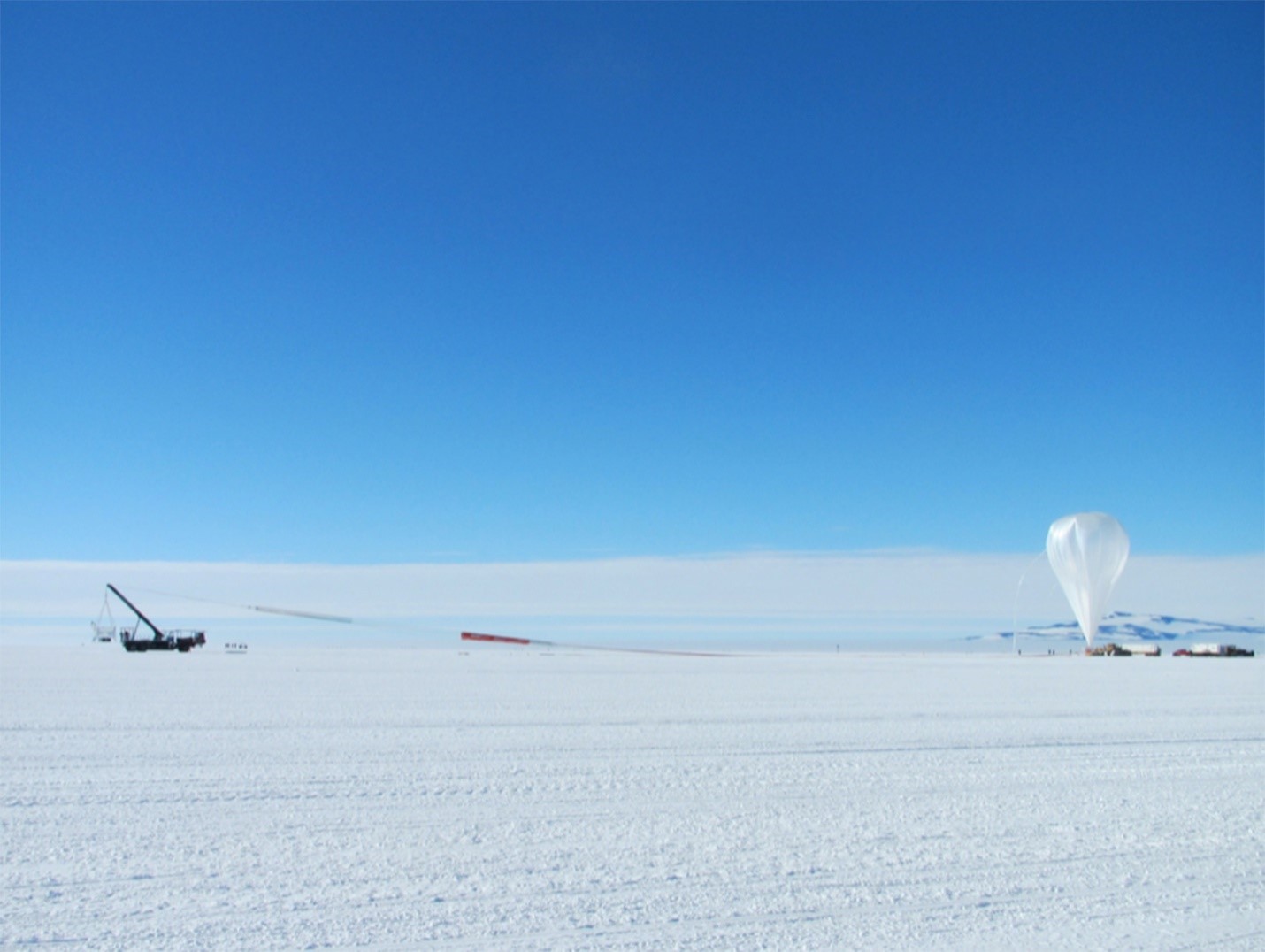
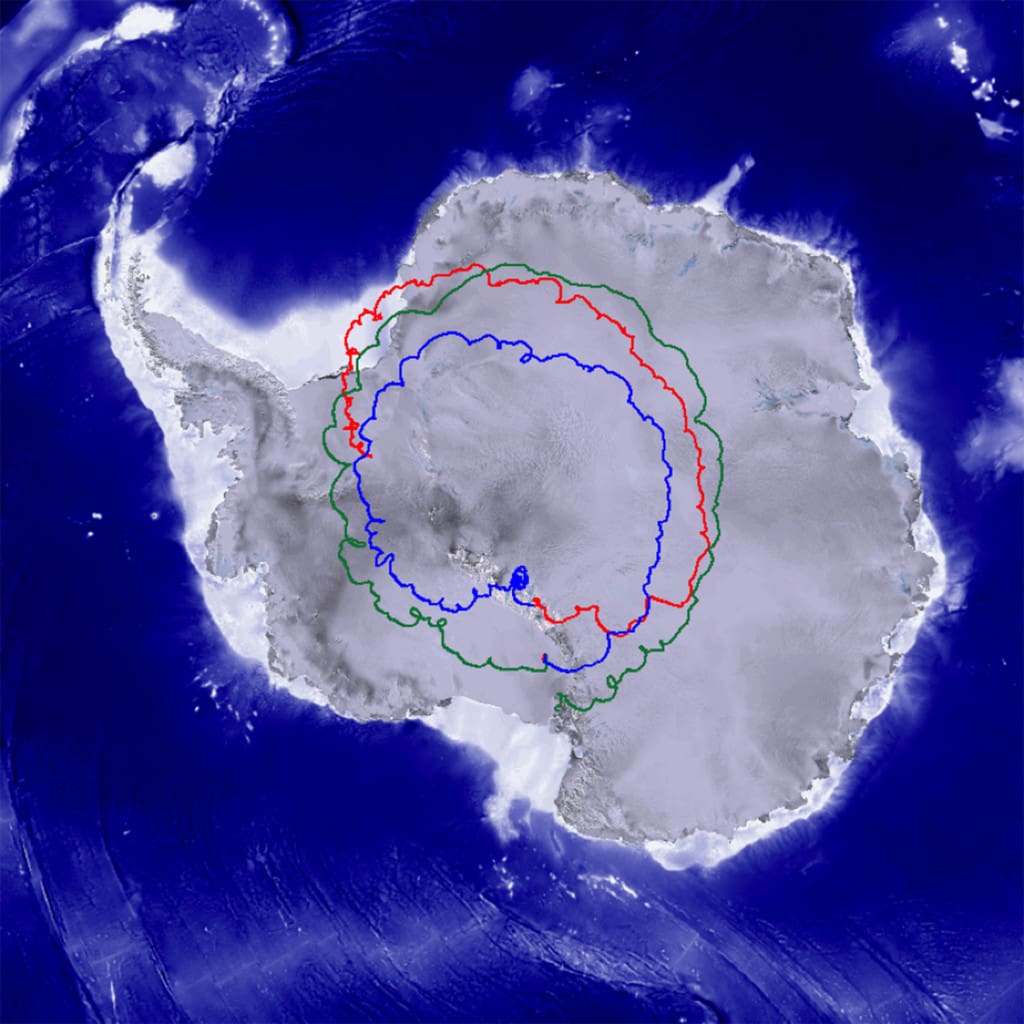
“The anticyclone takes our balloons on a circular flight trajectory, keeping the balloon over the Antarctic land mass for extended periods of time,” said Debbie Fairbrother, NASA’s Balloon Program Office chief. “Keeping the balloon over land helps enable recovery of the payload at the conclusion of the mission.”
NASA is using its largest qualified zero-pressure balloon for each flight, which at 40-million-cubic-feet of volume is as large as a football stadium when fully inflated. The payloads and instruments are solar-powered, making this time of year an ideal time for balloon flights since the region experiences sunlight 24-hours a day during the Antarctic summer.
The two unmanned balloon flights will take two equipment systems (payloads) to altitudes around 130,000 feet, which is above more than 99.5 percent of the Earth’s atmosphere.
The instrument Gamma-Ray Imager/Polarimeter for Solar flares (GRIPS) will collect data on the extremely high-energy particles released by solar flares, information that will help scientists pinpoint the processes that set off these explosive events.
The instrument Stratospheric Terahertz Observatory (STO-II) will collect data by performing large-scale, high resolution spectroscopic galactic surveys. These surveys will cover a portion of the galactic plane as well as a deeper survey of galactic arm and inter-arm regions.
Each science payloads weighs around 3,500 pounds. Including the gondola, ballast and weight of the balloon, the total load lifted by the massive heavy-lift balloons for each mission is around 9,600 pounds.
Campaign preparations began on-site at McMurdo Station, Antarctica, in mid-October for the two science missions. Here is the link to track the progress of NASA’s scientific balloon flights via online tools. http://www.csbf.nasa.gov/antarctica/ice.htm
Adapted in part by Sitara Maruf
Source: NASA, 11 December 2015; Editor: Patrick Black


2 Responses
Hello would you mind letting me know which hosting company you’re using?
I’ve loaded your blog in 3 completely different browsers and I must say this blog
loads a lot quicker then most. Can you recommend a good web
hosting provider at a reasonable price? Kudos, I appreciate it!
Thank you for your interest and appreciation. Our hosting company is https://qadigitalads.com/en/home/