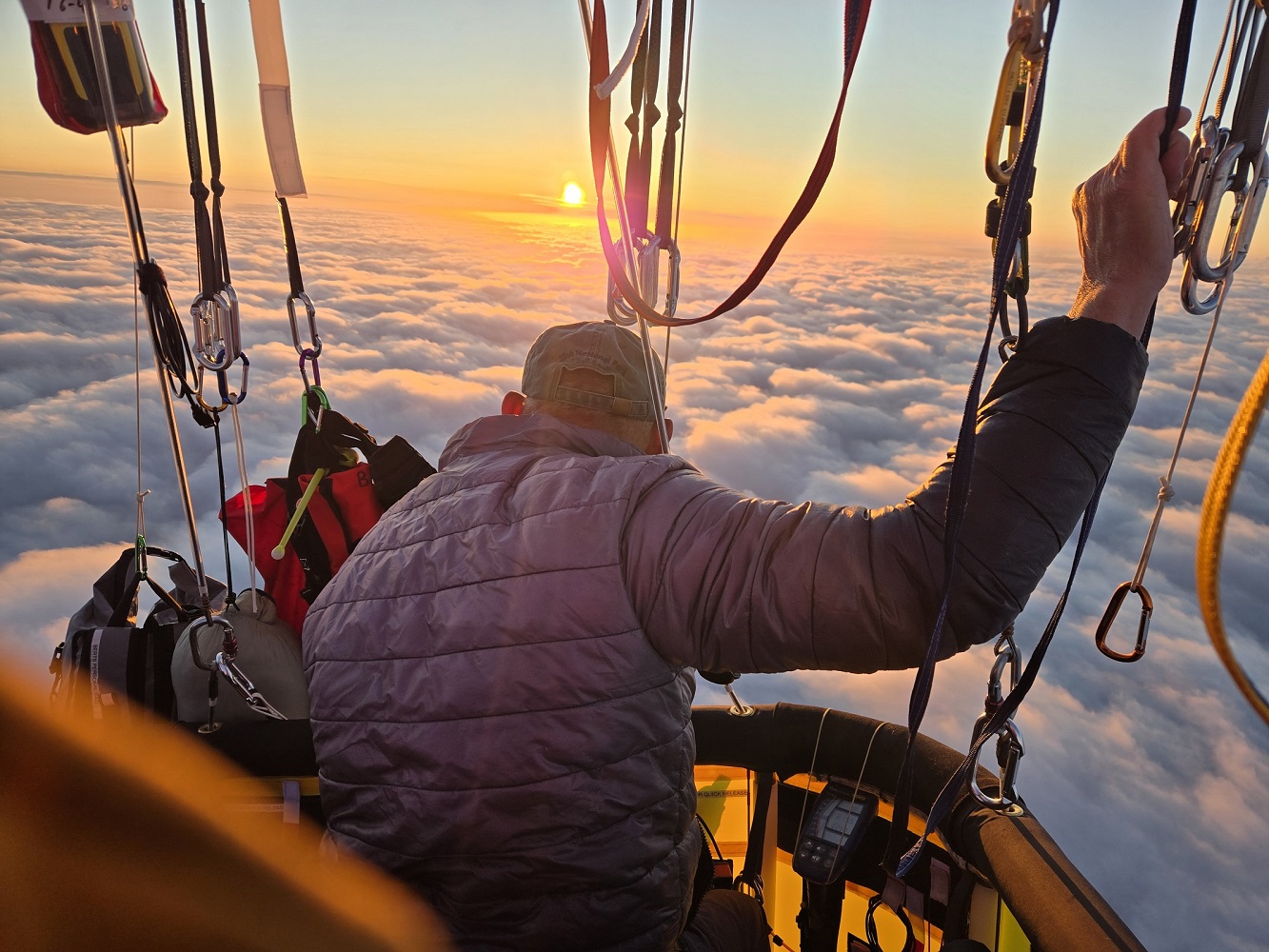
On June 7, 2026, Bert Padelt, Peter Cuneo, and Alicia Hempleman-Adams completed the first Atlantic crossing in a balloon using hydrogen as its sole lifting gas, flying from Presque Isle, Maine, to Luxembourg in 70 hours and 11 minutes.
In Part 1, Padelt described the years of preparation and the challenges of unpredictable weather, including an Atlantic storm, St. Elmo’s fire, and ice accumulation that forced the crew to make critical decisions.
In Part 2 of his in-depth interview with LTA Science & Flight, Padelt discusses flight safety, communications, the challenges faced by the crew, and the final hours before their historic landing in Luxembourg. He also reflects on what the achievement means to him after decades devoted to ballooning.
Communications, safety, and life aboard
Sitara Maruf: You carried supplemental oxygen. How did the equipment perform during the flight?
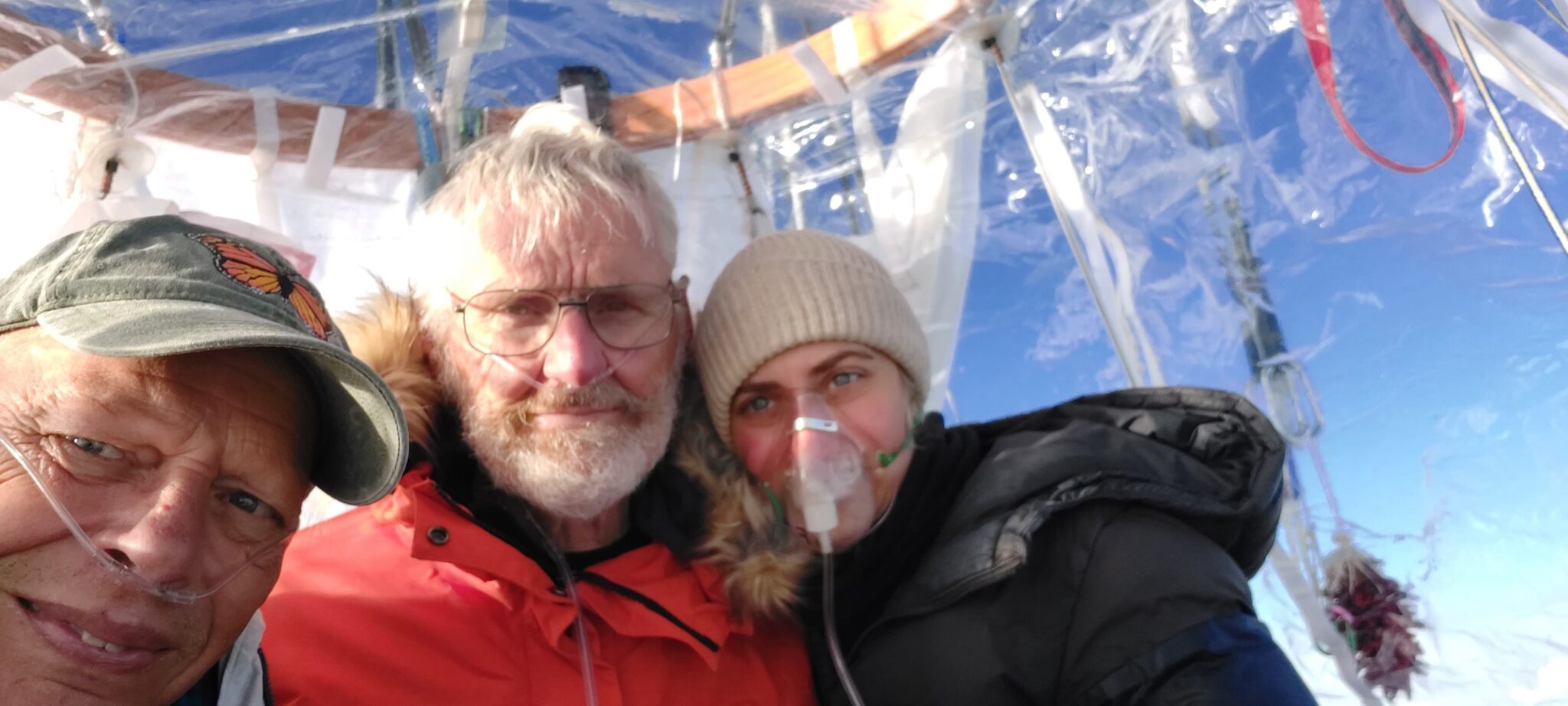
Bert Padelt: We did have some hypoxia issues during the flight. At one point, when we were at high altitude, one of the oxygen pulse units failed. Fortunately, I had built a lot of redundancy into the oxygen system, so we had another unit available.
Then a second pulse unit failed, which meant that two of us could continue using the pulse units while the third had to switch to a constant-flow system.
When I was planning the flight, I had thought through a lot of what-if scenarios and knew we needed sufficient backup equipment. Fortunately, I had carried a constant-flow system as a backup, and we ended up needing it.
The pulse units had gotten wet during the storm, and the water froze in the colder temperatures. That’s what caused them to fail.
Sitara Maruf: What communication systems did you rely on?
Bert Padelt: Our main communication system was Starlink, and it worked 100 percent of the time. It never failed. We also carried a backup Starlink unit with a different subscription in case the primary unit failed.
With Starlink, we had Internet access throughout the Atlantic crossing and communicated with our command center using WhatsApp on our cell phones. Most of our communication was through text messages, but we also made phone calls.
We carried satellite phones as another backup, but we never had to use them. We had a tremendous amount of redundancy in our communications, oxygen systems, and other equipment. Everything we flew with had a backup.
Sitara Maruf: What preparations had you made for an emergency landing at sea?
Bert Padelt: The command center, specifically Kevin Stass, was responsible for coordinating any rescue operation. The rescue authorities had already been informed of our flight, so they knew they might be called upon in an emergency.
We had checklists for everything we did, whether for launch, in-flight procedures, or ditching. We had a specific ditching checklist outlining the procedures we would follow if we had to land in the ocean.
The balloon was equipped with quick-release mechanisms that would allow us to separate the basket from the balloon just before hitting the water. This would prevent the balloon from dragging the basket underwater.
Our ditching procedure was carefully planned. Just before reaching the water, we would release the life raft, which was also secured with a quick-release mechanism, and then separate the balloon from the basket.
Alicia would be the first to leave the basket, followed by Peter and then myself. I would carry a grab bag containing a cell phone, water, emergency rations, and other essentials. The bag would go into the life raft with us.
Everything was methodically thought through, including the sequence of actions we would take. Kevin was responsible for initiating the rescue, and how that rescue would unfold would depend on where we went down.
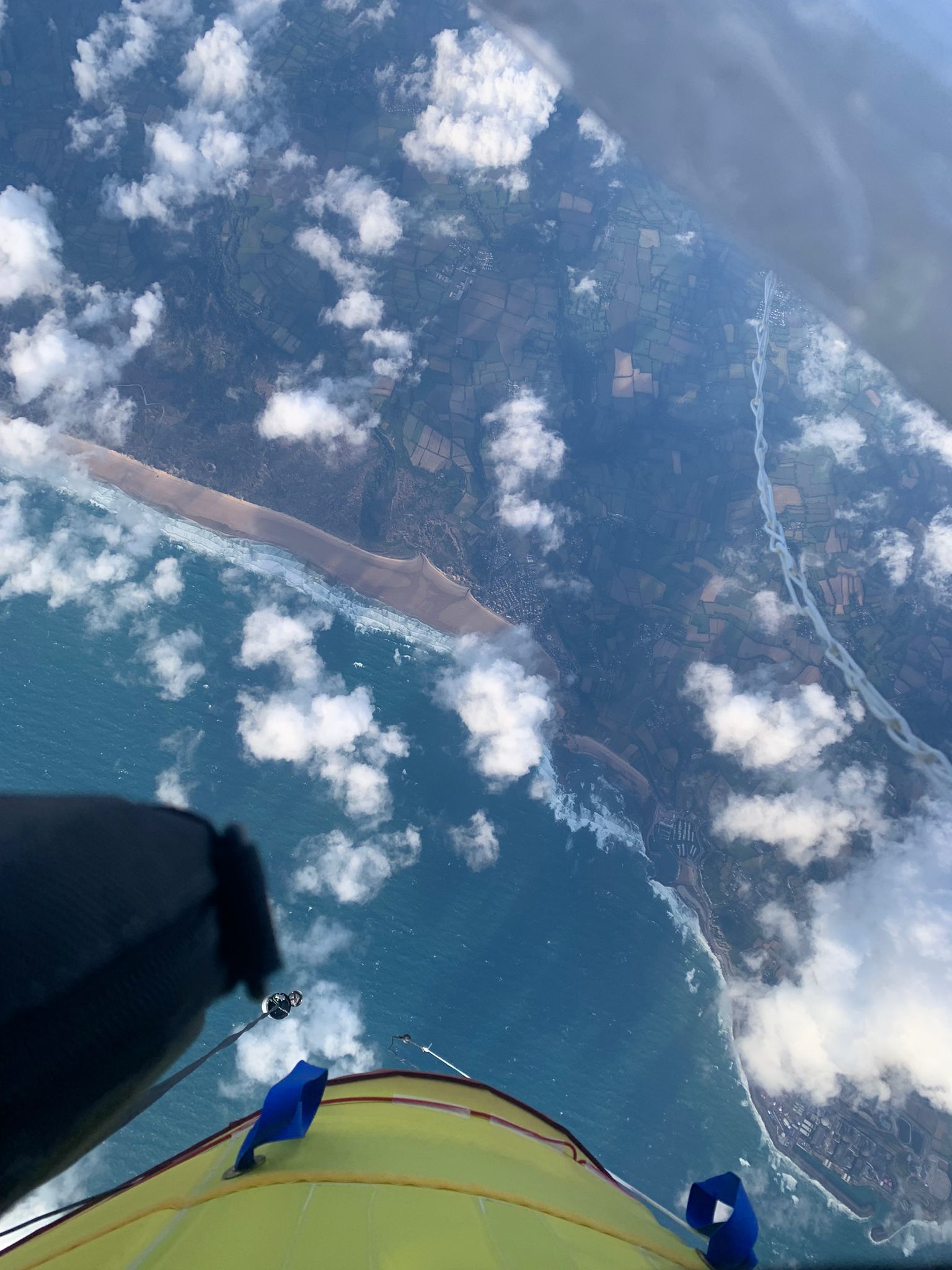
Photo: Alicia Hempleman-Adams.
Sitara Maruf: How did you divide responsibilities and manage sleep during the flight?
Bert Padelt: We took turns sleeping. One person would sleep, another would sit on the bunk and rest, and the third would fly the balloon. Every four hours, we would change shifts and rotate responsibilities.
You don’t get a lot of sleep. Even when you’re lying down, you’re on oxygen, and you can hear the other two people talking. You’re trying to close your eyes, but your sleep isn’t very sound.
On our last night in the air, I got a good four hours of solid sleep. I remember waking up thinking I was under my kitchen table at home and wondering who these people were in my kitchen. Then I realized, “Oh, I’m in the basket, and we’re going to be landing soon.”
Those last four hours in the air were my favorite. By then, I knew exactly where we were going to land. The weather looked good, and the balloon was flying extremely well. It felt like all the challenges we’d faced were behind us, and everything was looking good for our landing.
Sitara Maruf: How did you manage the physical demands of high altitude and extreme cold?
Bert Padelt: Well, you don’t get a lot of sleep on flights like that. I think we were all averaging maybe four hours of sleep a day. You do get some rest, but being on oxygen is fatiguing in its own way. At the same time, the adrenaline is flowing, so you’re fatigued but also excited. It’s exhilarating, really.
We carried plenty of cold-weather clothing because I knew it was going to be cold. Our lowest temperature was minus 19 degrees Fahrenheit. I hadn’t expected it to be that cold, nor had I anticipated flying as high as we did. Obviously, higher altitudes bring colder temperatures, but I hadn’t expected us to reach those heights.
Fortunately, we had brought the right clothing to keep us warm. I never really felt cold, even when we were at altitude.
Sitara Maruf: Did you feel a particular responsibility toward Alicia because of your friendship with her father, Sir David Hempleman-Adams?
Bert Padelt: When Alicia first flew with us, I did feel a little sense of responsibility, but that quickly went away once we were in the air. Alicia did a wonderful job and played a big part in the flight. So, on the successful crossing, having flown with her before, I didn’t feel that responsibility as much. I looked at Alicia as one of the three pilots, and I was very impressed with her skills. She certainly contributed to the success of the flight.
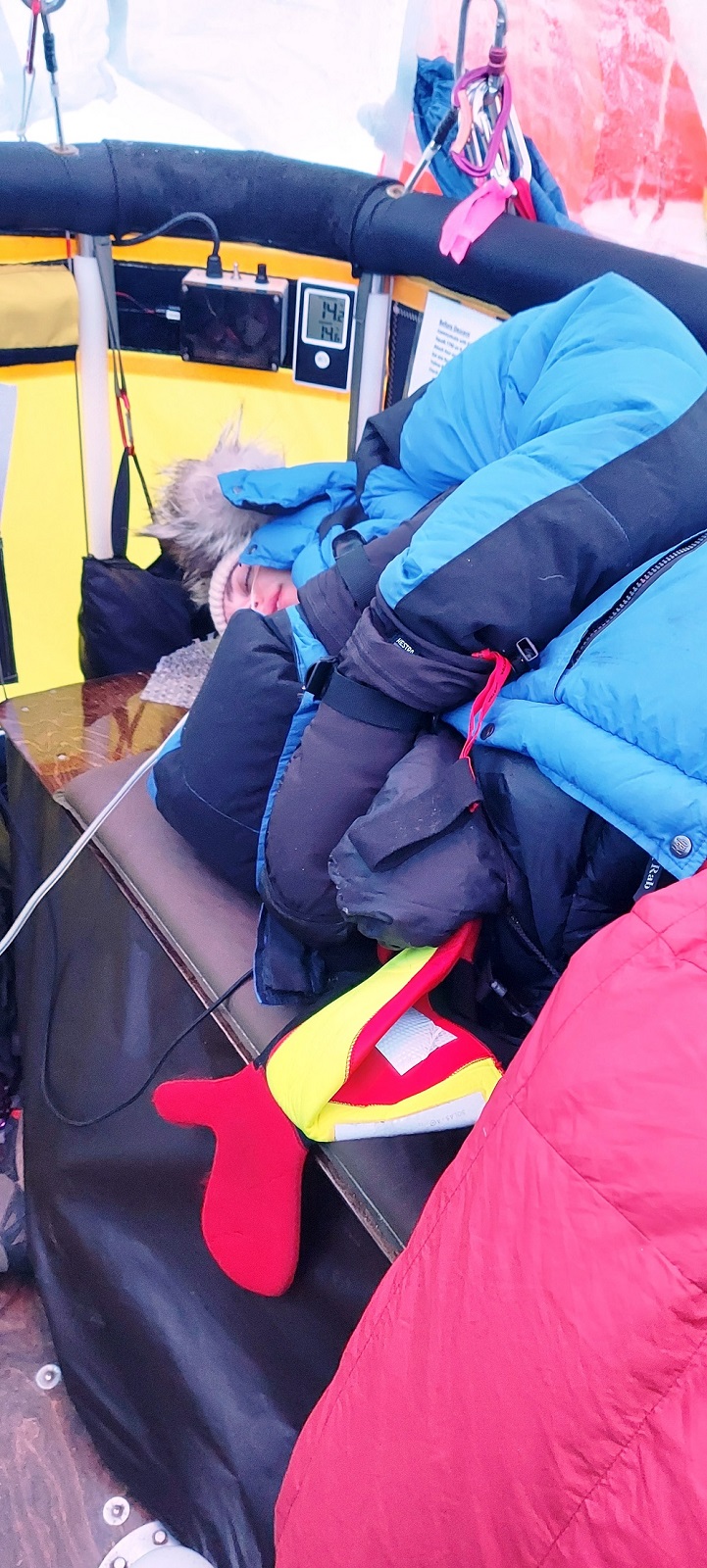
I remember one morning after the storm when it was 14 degrees Fahrenheit in the basket. It was very cold. Peter was asleep under the bunk, and Alicia was sleeping on top of it. I took a picture of her, and I remember looking at her and feeling a little bad. I wondered, did she know what she was getting into when she signed up for this flight? Here she was, all bundled up in 14-degree weather.
But she never complained—not once during the flight. And whenever we were making decisions, she was right there, offering her advice and thoughts.
I never looked at her as David Hempleman-Adams’ daughter during the flight. I looked at her as a fellow pilot.
Sitara Maruf: Peter Cuneo is an experienced gas balloon racer. I understand that on one of his balloon flights, he spent even longer in the air than during the Atlantic crossing.
Bert Padelt: Yes, I think on one of his flights, he flew for 72 or 75 hours. Peter is a good friend of mine. In fact, I consider him one of my best friends. When you undertake a flight like this, you obviously want to fly with someone you know well. So, when David couldn’t go, Peter was a logical choice for me.
The European coast and landing
Sitara Maruf: When did you begin to feel confident that you would make it?
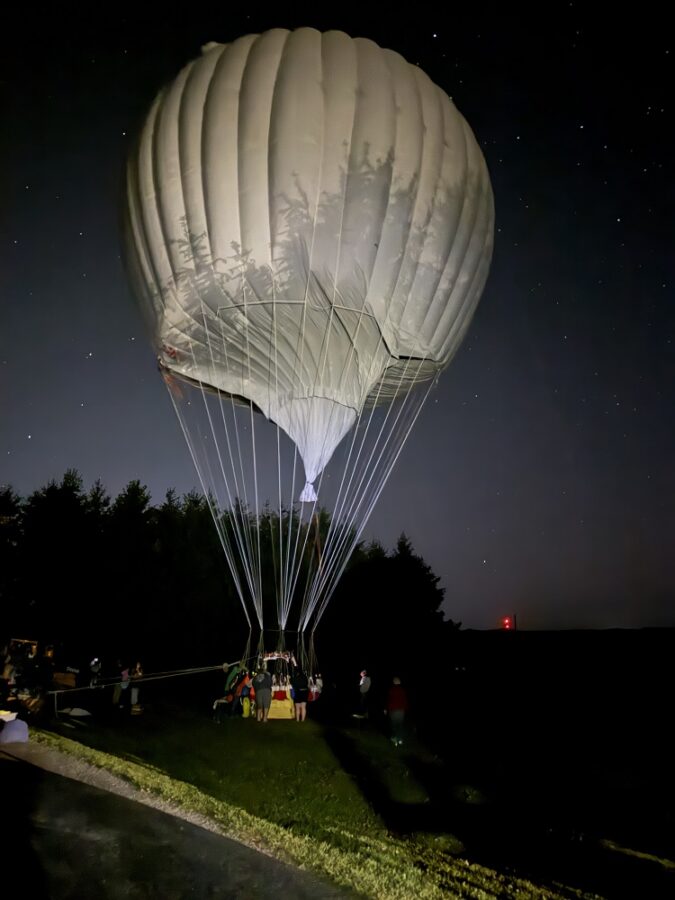
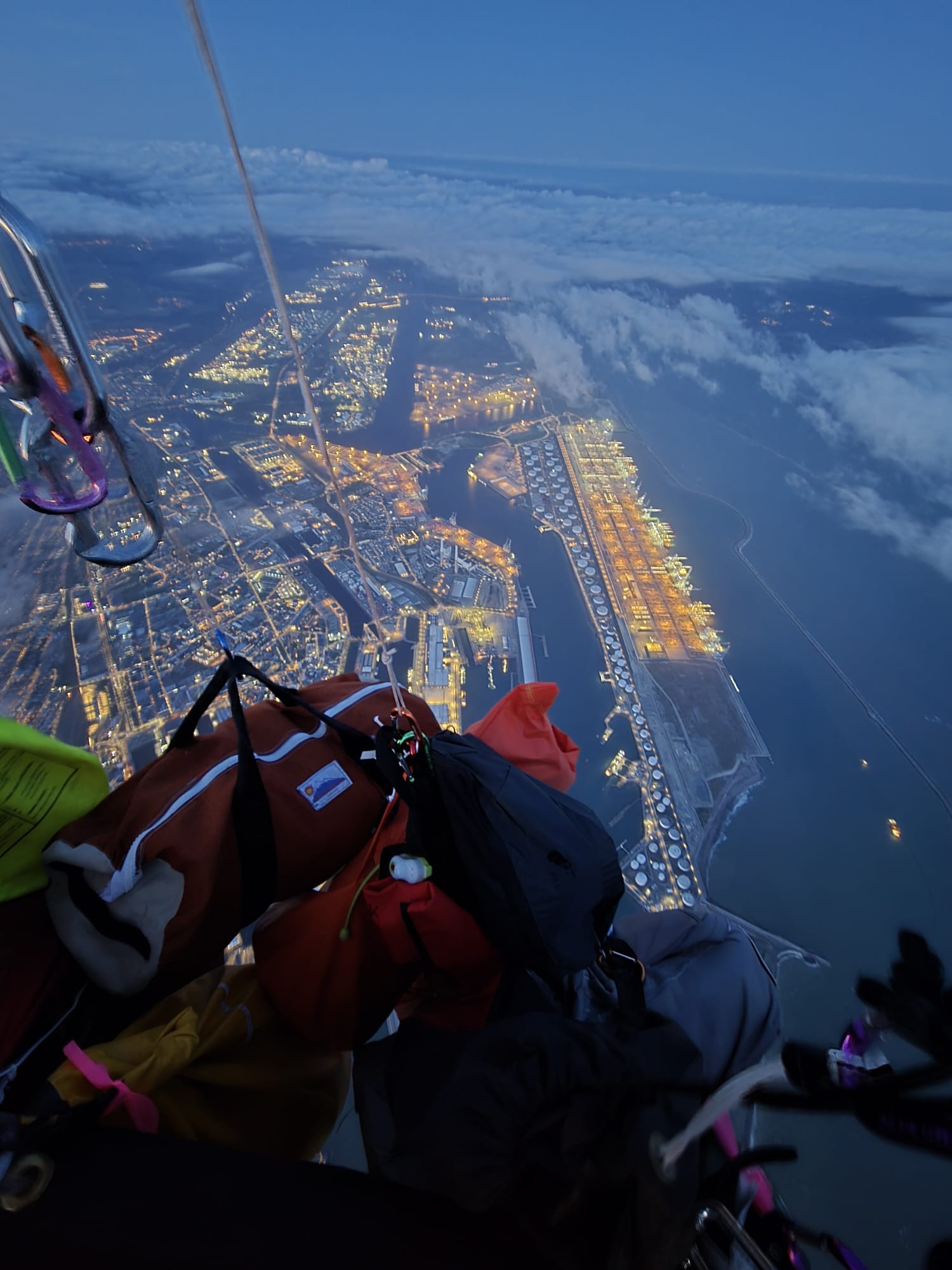
Bert Padelt: We made landfall about two hours before sunset, around 8:30 in the evening. Sunset in France, as I recall, was around 10:15 that night. At that point, we were still considering landing that evening.
The problem was that winds along the French coast were very strong. If we descended, we would swing north, and the meteorologists were concerned that we might miss France altogether, head up the English coast, and end up over the North Sea, where there was bad weather.
We were low on ballast, so I quickly realized we needed to stay in the air one more night. Once we got through sunset, the balloon was flying straight and level, and the conditions for the following morning were ideal. We had, I think, seven bags of ballast left—just enough to make the landing. We couldn’t afford to miss it. It had to be done right.
That was when I finally felt confident we were going to have a good landing.
This was the most rewarding flight I’ve ever had, and the most challenging. I knew there would be difficulties, but I don’t think I anticipated one thing after another. Just when we thought, “Whew, we got through that one,” something else would come up.
It wasn’t until that last night in the air that we could finally take a deep breath and say, “We did it, and it’s all good.”
Crossing the coast was certainly an emotional moment, but I think the full significance of what we’d accomplished really hit me once we landed.
Sitara Maruf: Could you describe the landing in Luxembourg?
Bert Padelt: I brought the balloon down very slowly because we had only seven bags of ballast left. As we descended, pieces of ice that had frozen onto the load tapes began falling off, almost like little helicopters. The balloon would descend at about 200 feet per minute, then nearly level out as the ice fell away. I would valve a little more to maintain our descent.
I could see where I wanted to land ahead of us. I didn’t have to level the balloon out much, and at the last minute, I actually had to valve a little more to bring it down faster and get the descent right.
The air near the ground was so calm that we didn’t even need to use the trail rope. The balloon came straight down, and we landed on top of a hill, with a meadow below and the town nearby.
I remember looking at Peter and Alicia and saying, “I’d like to take off again and fly down to that meadow.” They both looked at me and said, “No.”
So Peter got out, which lightened the basket, and walked us down to the meadow.
Sitara Maruf: When did the achievement truly sink in?
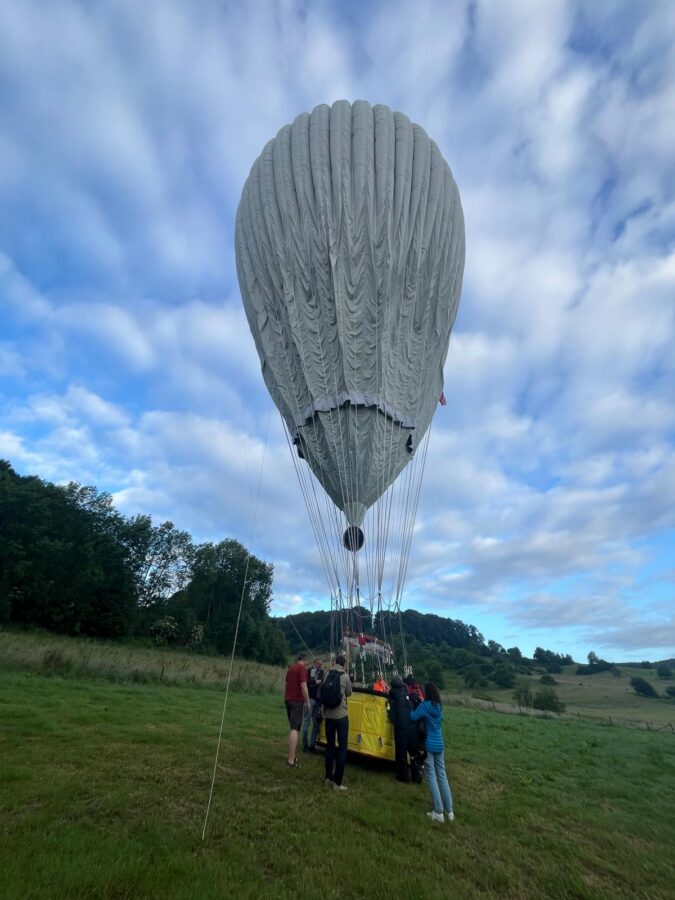
Bert Padelt: I think it was after we landed. We walked down to the meadow, and when I got out of the basket, I walked away from the balloon and turned around to look at it. It was still inflated, and I wanted to get a picture. So I walked to the end of the field, turned around, and saw the balloon sitting there. I think that’s when it really dawned on me what we had accomplished.
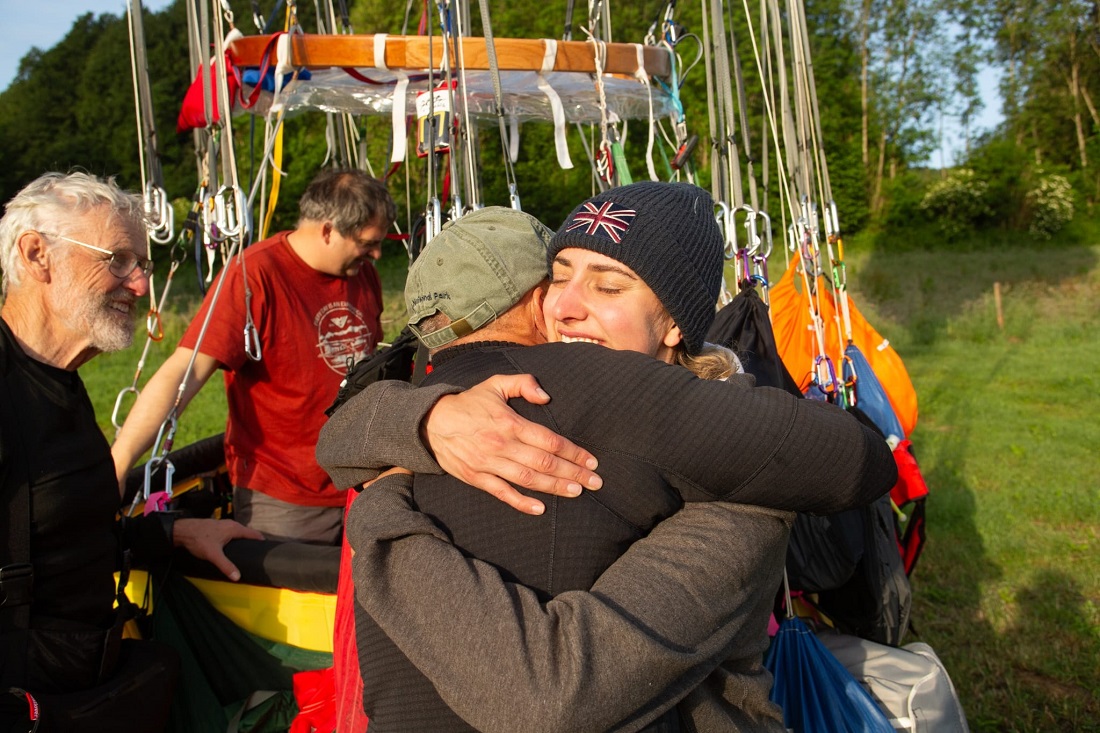
What was wonderful was that Peter’s wife and my wife, Joanie, were only about half an hour away from our landing site. By the time they arrived, the balloon was still inflated, so they were able to see it. That was a very special moment. And for me, having my wife there after all these years, with the balloon still inflated—you couldn’t have asked for a better scenario.
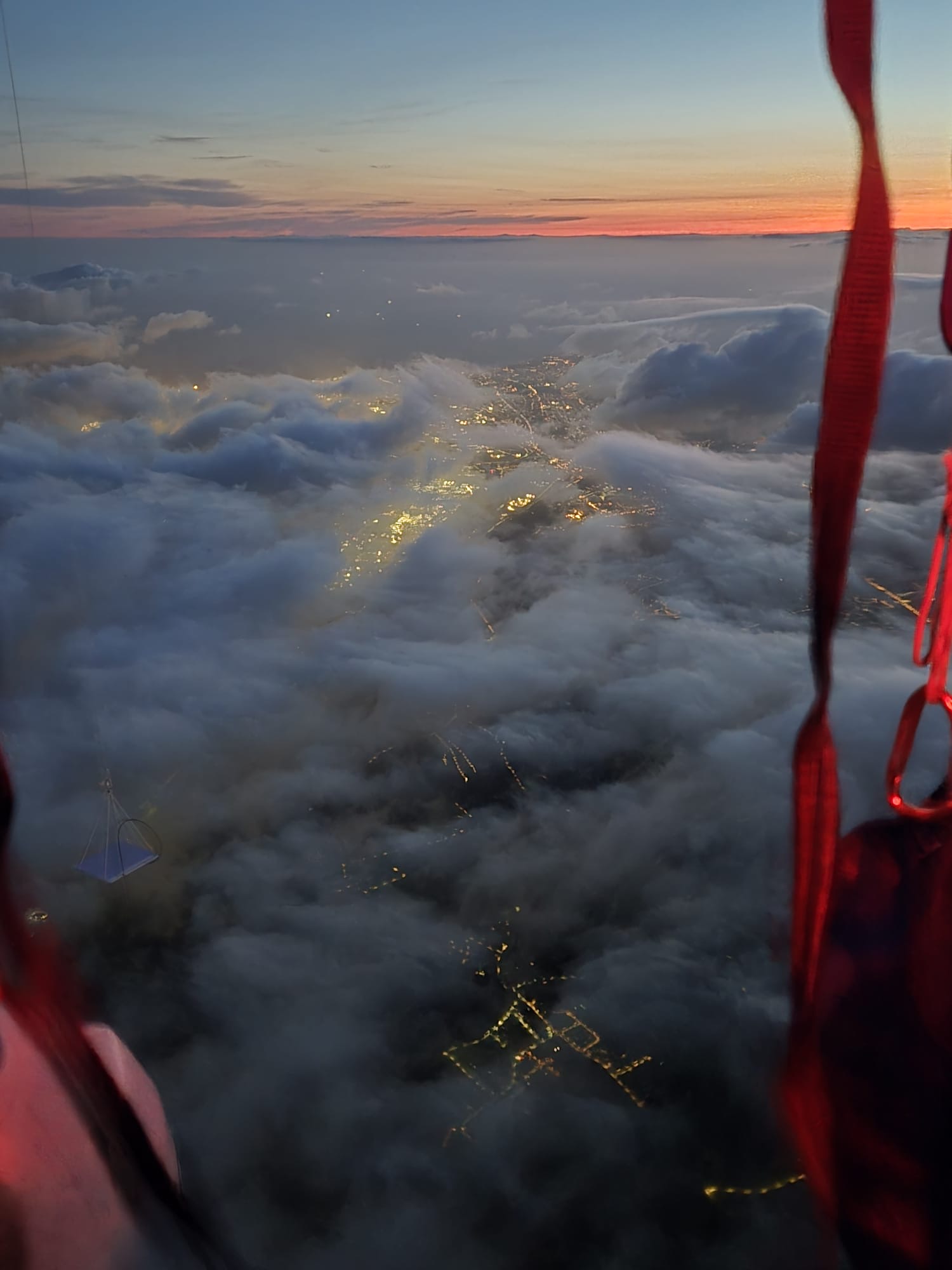
Photo: Peter Cuneo.
Sitara Maruf: The Atlantic Explorer reached an altitude of 23,000 feet. How did that compare with previous Atlantic gas-balloon flights?
Bert Padelt: If you look back at the three gas balloons that crossed the Atlantic before us—Double Eagle II, Joe Kittinger’s balloon, and David Hempleman-Adams’s balloon—I think Double Eagle II reached about 22,000 feet, while Joe Kittinger’s highest altitude was around 18,000 feet. David’s flight was considerably lower, reaching about 12,000 feet, I believe.
So yes, we were flying pretty high.
Lessons and life after the crossing
Sitara Maruf: What did this flight teach you that you had not learned in decades of ballooning?
Bert Padelt: I think the most important lesson was how critical redundancy is. You can’t have too much backup equipment on a flight like this.
From a weather standpoint, I’ve also learned how much the weather has changed over the 40 years I’ve been flying balloons. Finding a suitable weather window for a low-level Atlantic crossing is more difficult now than ever before. I think Don Day would agree with that. In another 20 years, I question whether it will even be possible to find the right conditions for such a flight.
Our crossing was considered a low-level flight, even though we reached 20,000 feet. By low-level, I mean flying below the jet stream, at altitudes under 30,000 feet.
Crossing the Atlantic at those altitudes in a conventional gas balloon, rather than a Rozière balloon, is extremely difficult. A Rozière would give you much greater flight endurance, and flying higher would allow you to take advantage of the jet stream winds.
But doing it the way we did means you’re really in the weather. Finding a favorable weather pattern that extends all the way across the Atlantic is very difficult.
Sitara Maruf: Could a hydrogen gas balloon make a similar crossing of the Pacific Ocean?
Bert Padelt: Yes, it’s still doable, but you’d have to fly higher. I built the balloon that Troy Bradley flew across the Pacific. It was also a gas balloon, but it was filled with helium. They made the crossing at high altitude, between 25,000 and 30,000 feet, and in the wintertime.
Sitara Maruf: Do you have another major flight in mind?
Bert Padelt: For me personally, this was the flight I wanted to do. Unlike someone like Steve Fossett or David Hempleman-Adams, whose goal was to undertake as many interesting adventures as possible, this was the one flight that mattered most to me.
I don’t have a desire to fly across the Pacific or pursue another major expedition. This was the personal goal I had set so many years ago, and I’m very content with what I’ve accomplished.
Sitara Maruf: Are you still involved full-time in balloon manufacturing and flying?
Bert Padelt: Oh, yeah. I’ll continue flying gas balloons. I’m not going to stop flying. I’m involved in ballooning every single day of my life, with my shop and repair station.
I go to bed thinking about balloons and wake up thinking about balloons. And when the weather’s good, I go out and fly my hot-air balloon. All of that will continue.
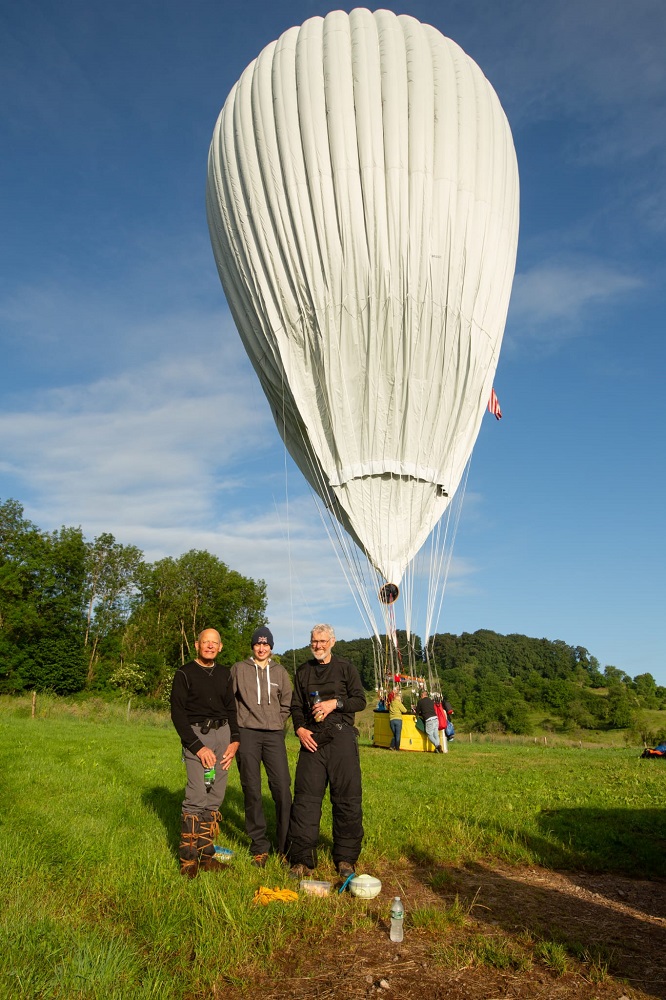
Family and friends reunite with the Atlantic Explorer crew following their historic landing in Luxembourg on June 7, 2026.

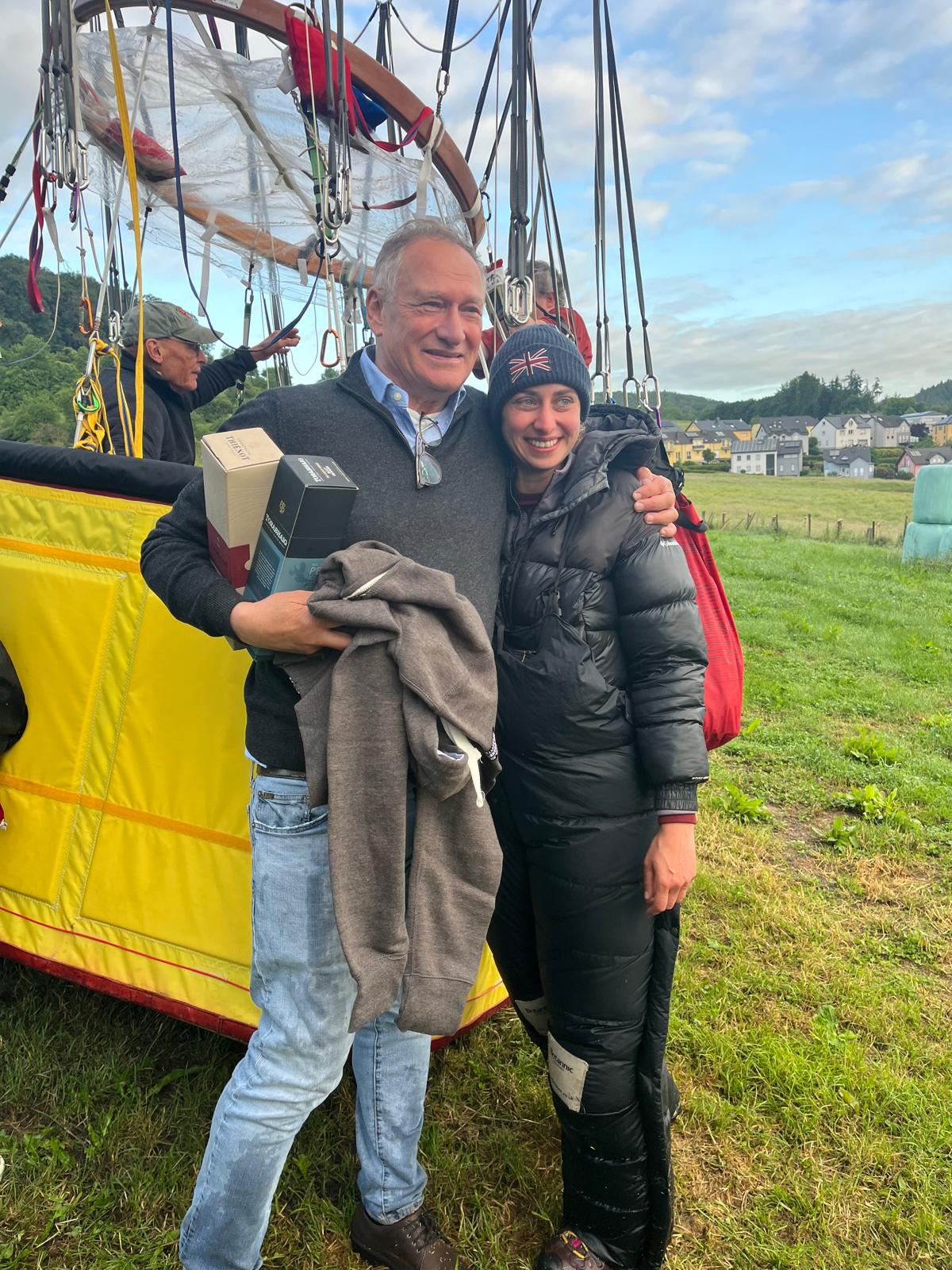
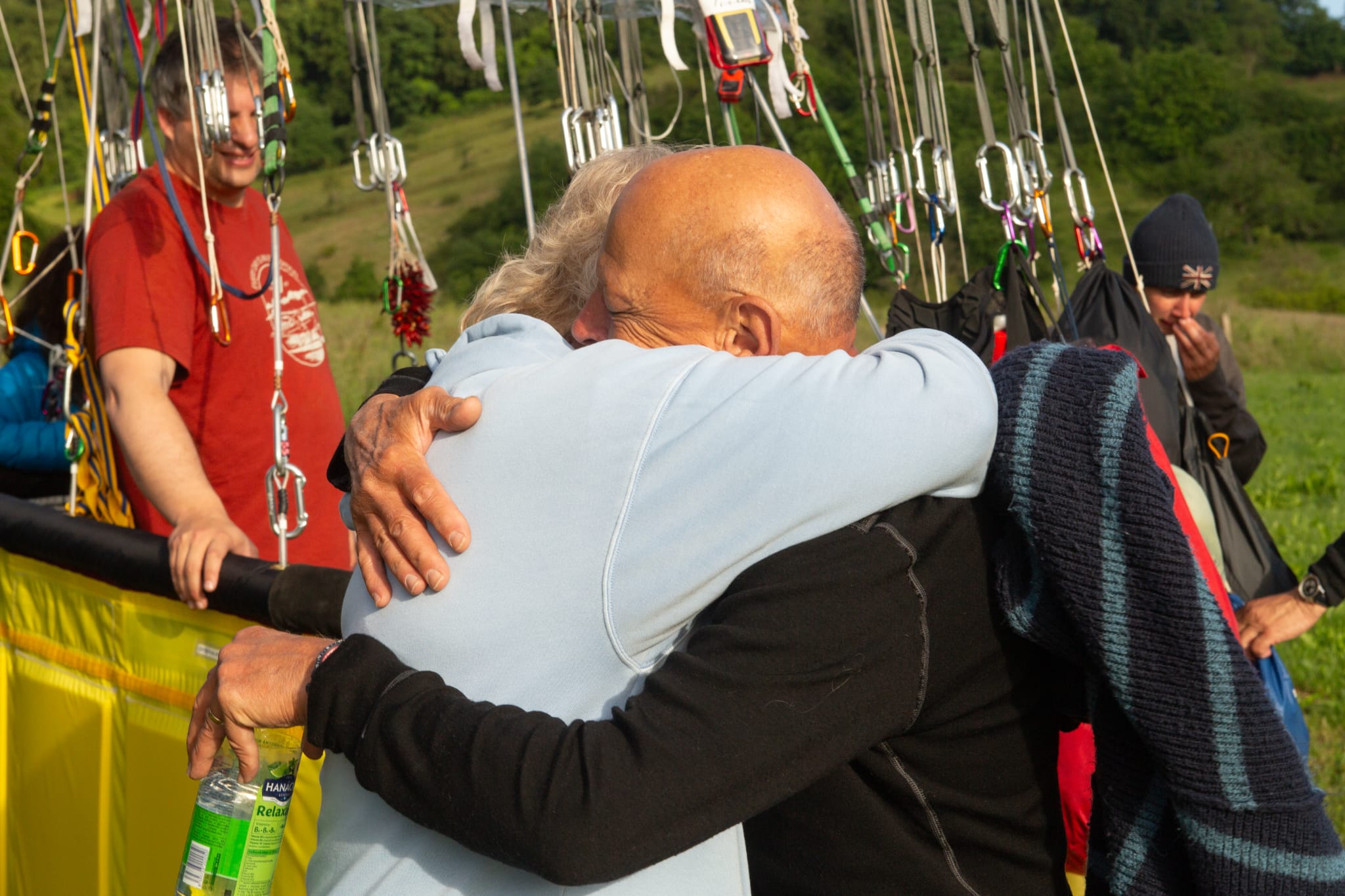
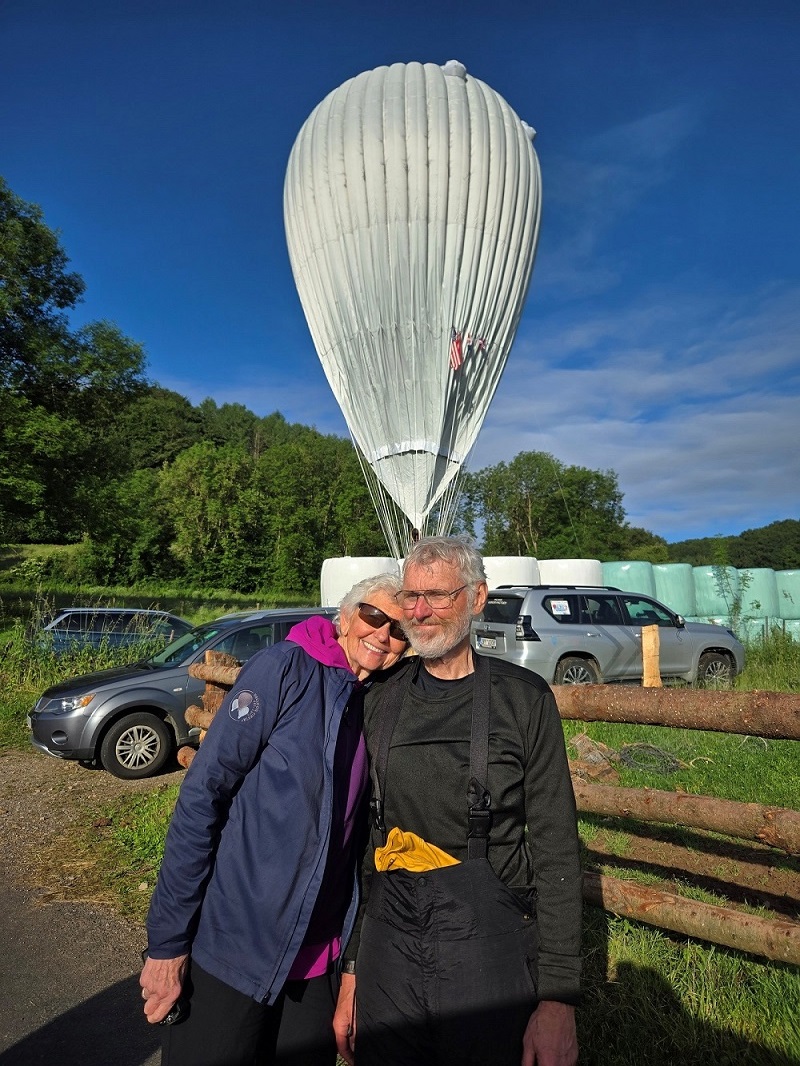
LTA Science & Flight congratulates Bert Padelt, Peter Cuneo, and Alicia Hempleman-Adams on their historic achievement. Their successful Atlantic crossing marks a significant milestone in ballooning history and demonstrates what determination, experience, teamwork, and careful preparation can accomplish.
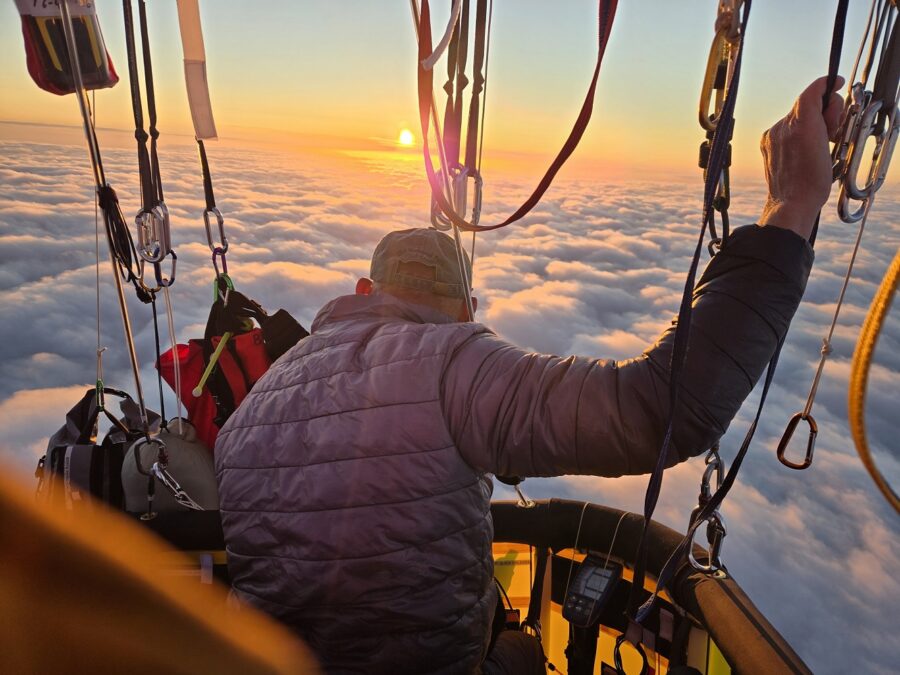
Featured photo: Bert Padelt descending toward Luxembourg shortly after sunrise on June 7, 2026. Photo courtesy of Bert Padelt.