
We are making changes and apologize for any inconvenience. Thank you for your patience
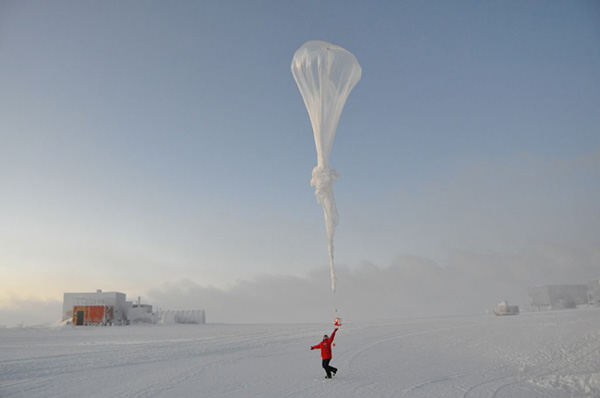
NOAA’s ESRL launch a balloon, carrying instruments that measure water-vapor in the upper atmosphere. Credit: NOAA
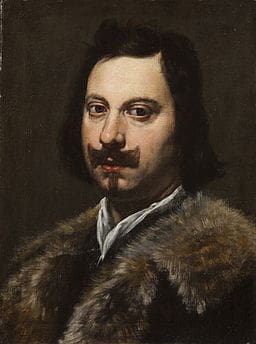
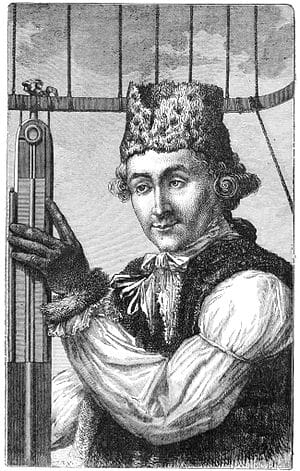
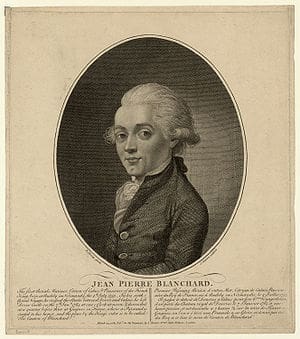
Specifically, the credit for early weather observations, from a balloon, goes to Dr. John Jeffries. His first balloon flight was a frightening and disappointing experience, but also historic and triumphant in a different way! Born in 1744, Dr. Jeffries, a Harvard-educated physician also had a great deal of interest in learning about the atmosphere. While practicing in England, he paid an astronomical 700 pounds to French balloonist Jean-Pierre Blanchard to build a balloon for the crossing of the English Channel. Jeffries’ condition was that he should be allowed on the journey with his scientific instruments to take some weather measurements.
On 7th January 1785, the duo took off on a daunting balloon crossing of the English Channel. They launched from the English side to fly across to France, but the balloon threatened to crash in the English Channel. To make the balloon lighter and to keep it afloat, Jeffries was compelled to throw away his instruments. Still the balloon refused to ascend, and the aeronauts were forced to dump everything, including their clothes. Eventually, their balloon caught a rising warm air current, which landed them in Calais in France, as naked as the trees, writes Jeffries; thankful to be alive and for achieving the triumphant crossing of the dangerous English Channel.
Jeffries is credited with being among America’s first weather observers and his birthday 5th February is celebrated as National Weatherperson’s Day in his honor.
As a matter of fact, brilliant research by some chemists and physicists of the 17th and 18th centuries yielded significant scientific breakthroughs that contributed to the understanding of many unknown aspects of the atmosphere.
Only few examples are mentioned here. Robert Boyle and Jacques-Alexandre-César Charles formulated the laws of gas pressure, temperature, and density; Isaac Newton and Gottfried Wilhelm Leibniz’s developed calculus; Joseph Black came up with the doctrine of latent heat (i.e., heat release by condensation or freezing) and John Dalton developed the law of partial pressures of mixed gases. These important insights led to more progress in science and technology and eventually to the development of the modern weather balloon and instruments that help to produce useful weather forecasts.
References:
1. National Oceanic and Atmospheric Administration, National Weather Service. “Weather Balloons”
(8 October 2012) weather.gov <http://www.srh.noaa.gov/bmx/?n=kidscorner_weatherballoons>
2. Tristin Hopper “How Weather Balloons Work” 9 May 2011.
HowStuffWorks.com. <http://science.howstuffworks.com/nature/climate-weather/meteorological-instruments/weather-balloon.… 11 January 2016
3. Encyclopædia Britannica Online, s. v. “weather forecasting”, accessed February 02, 2016, http://www.britannica.com/science/weather-forecasting.
4. Nick Heil, The Dark Summit: The True Story of Everest’s Most Controversial Season (New York: Henry Holt and Company, 2008), 51.
5. L.T.C. Rolt, The Balloonists: The History of the First Aeronauts (Gloucestershire: Sutton Publishing, 2006),82-88
6. Lennart Ege, Balloons and Airships (New York: MacMillan Publishing, 1974), 103-105
7. Fulgence Marion: Wonderful Balloon Ascents (1870)