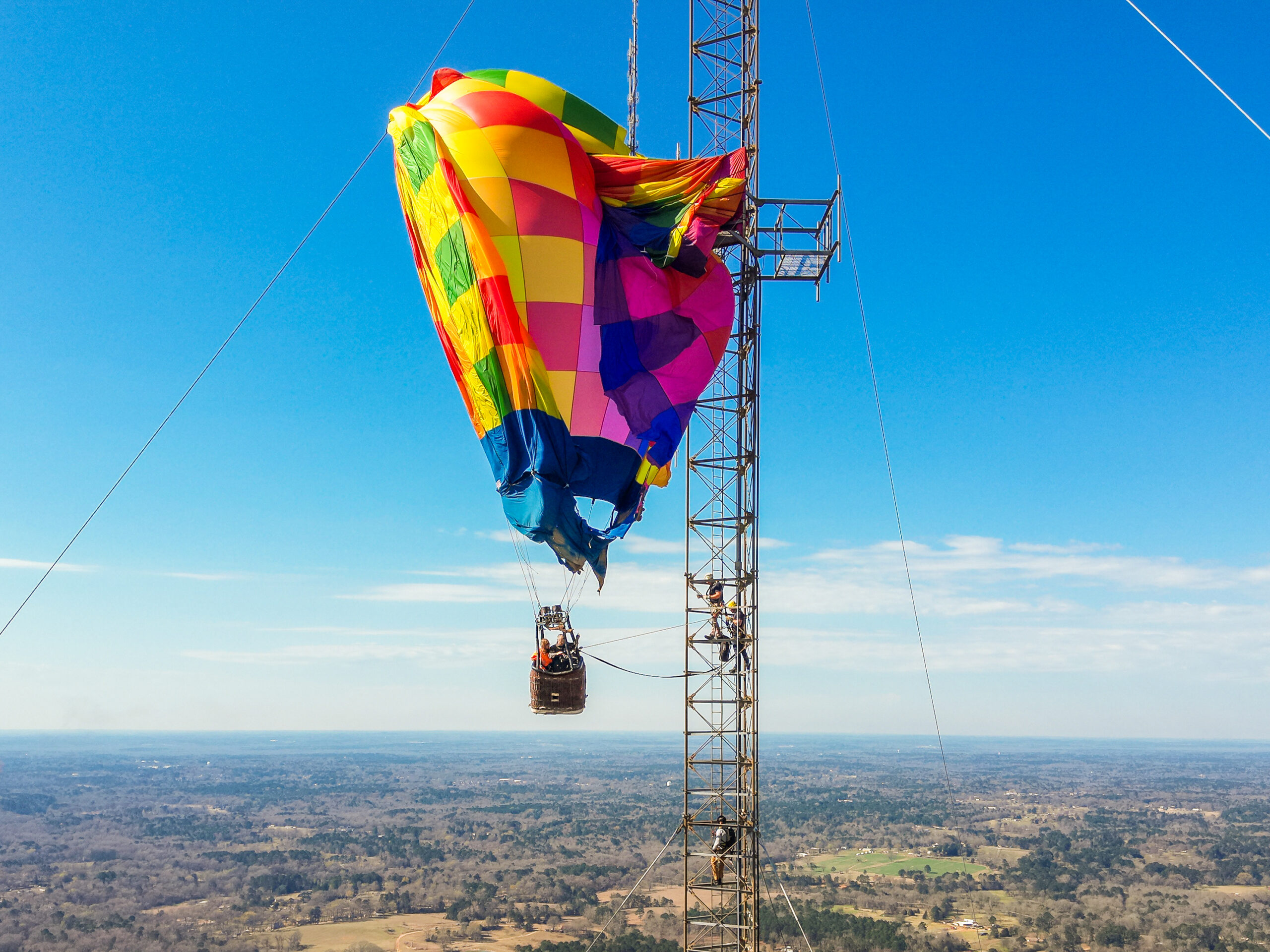
On the morning of February 28, 2026, a hot air balloon basket hung beside a cell tower high above Longview, caught in the structure nearly 920 feet above the ground. Below, firefighters had to figure out how to reach two stranded balloonists in a place where no routine rescue plan quite fit. The unusual emergency would test them against time, altitude, wind, and exhaustion all at once.
For Hunter King, one of the rescuers, the first reaction was disbelief.
“We always talk about a tower rescue, but never almost a thousand feet up,” King said. “It was just kind of processing that this was actually happening.”
In an interview with Sitara Maruf, King and Jake Robertson, both driver engineers with Longview Fire’s Special Operations Team, described how the rescue unfolded—from the first 911 calls to the final climb back down.
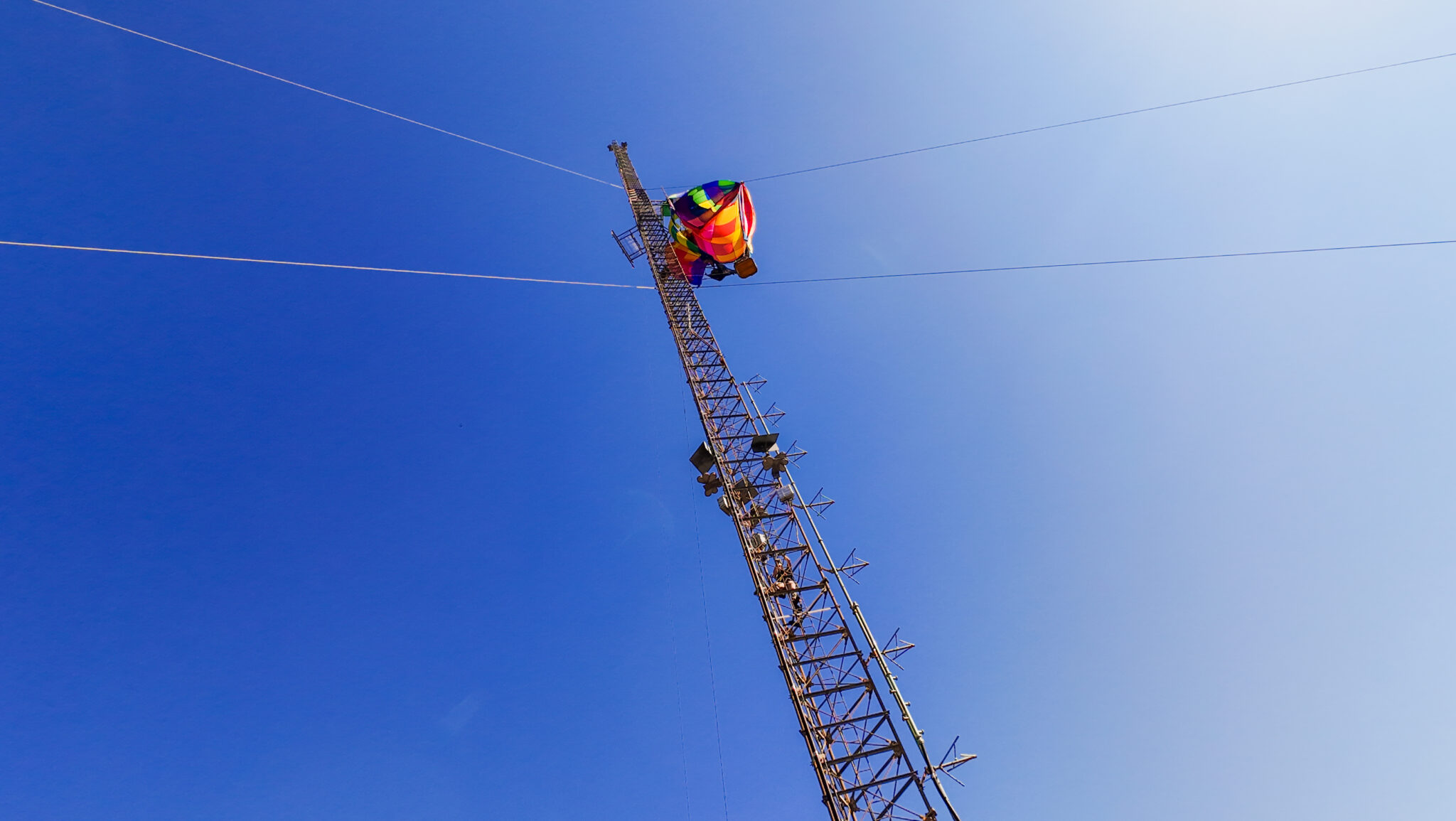
According to Robertson, dispatch received calls not only from bystanders on the ground but also from the balloonists themselves. By the time firefighters arrived on scene at 8:26 a.m., they were facing a formidable problem: a balloon basket suspended about 920 feet up, hanging roughly 10 feet off the tower, with the balloon and its lines tangled in the tower’s structural guide lines.
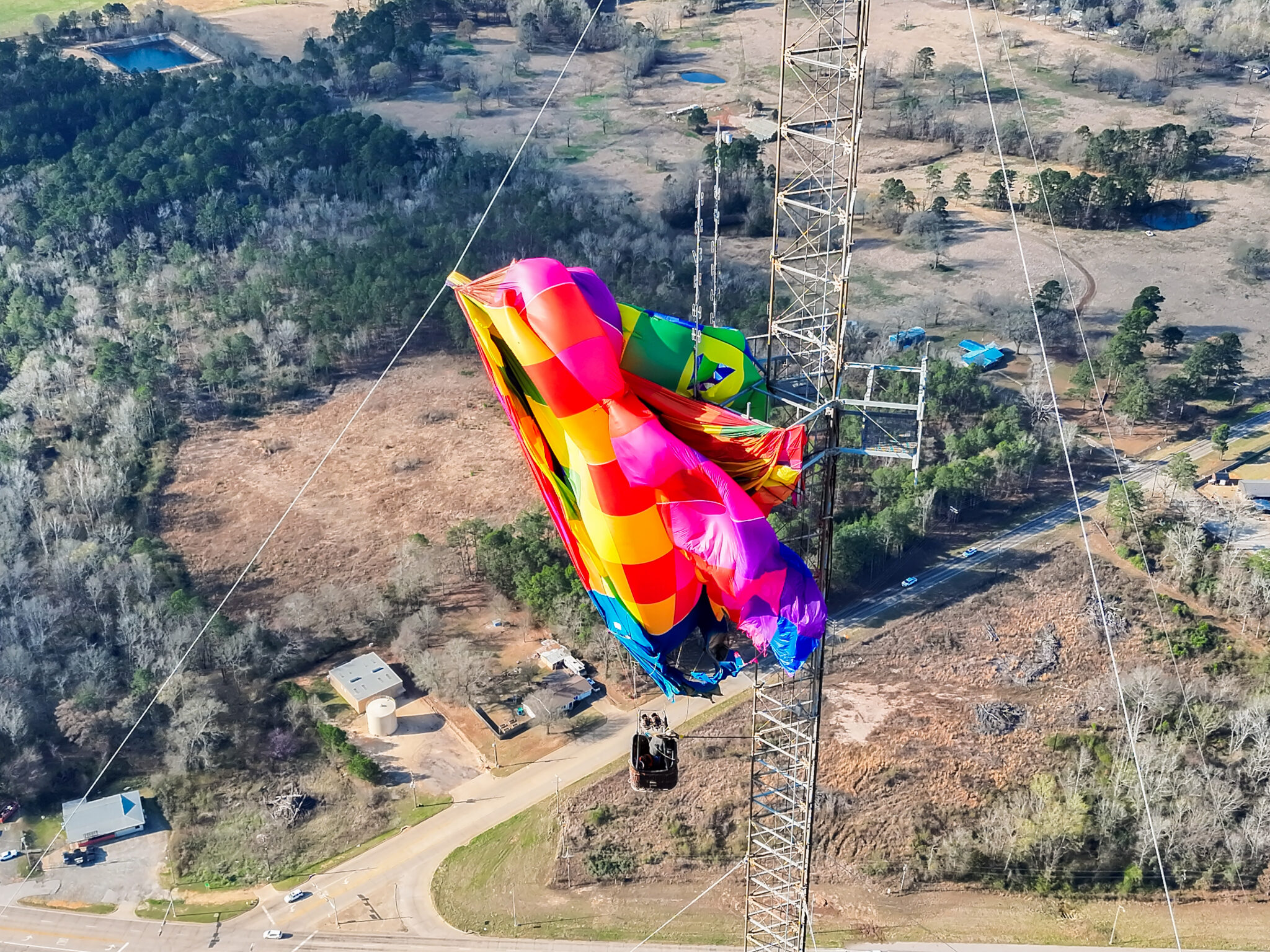
The scene was precarious, but strangely, King said, it appeared the balloon had struck one of the few spots where it could actually remain caught instead of falling. Even so, the basket was moving in the wind. Robertson added, “We’ve trained on tower rescues and we have trained on the possibility of balloon crashes. We just never thought about putting them together at over 900 feet.”
Still, the rescuers had the equipment they needed. The challenge was to organize the response quickly and carry it out on a narrow steel structure rising nearly a thousand feet into the air.
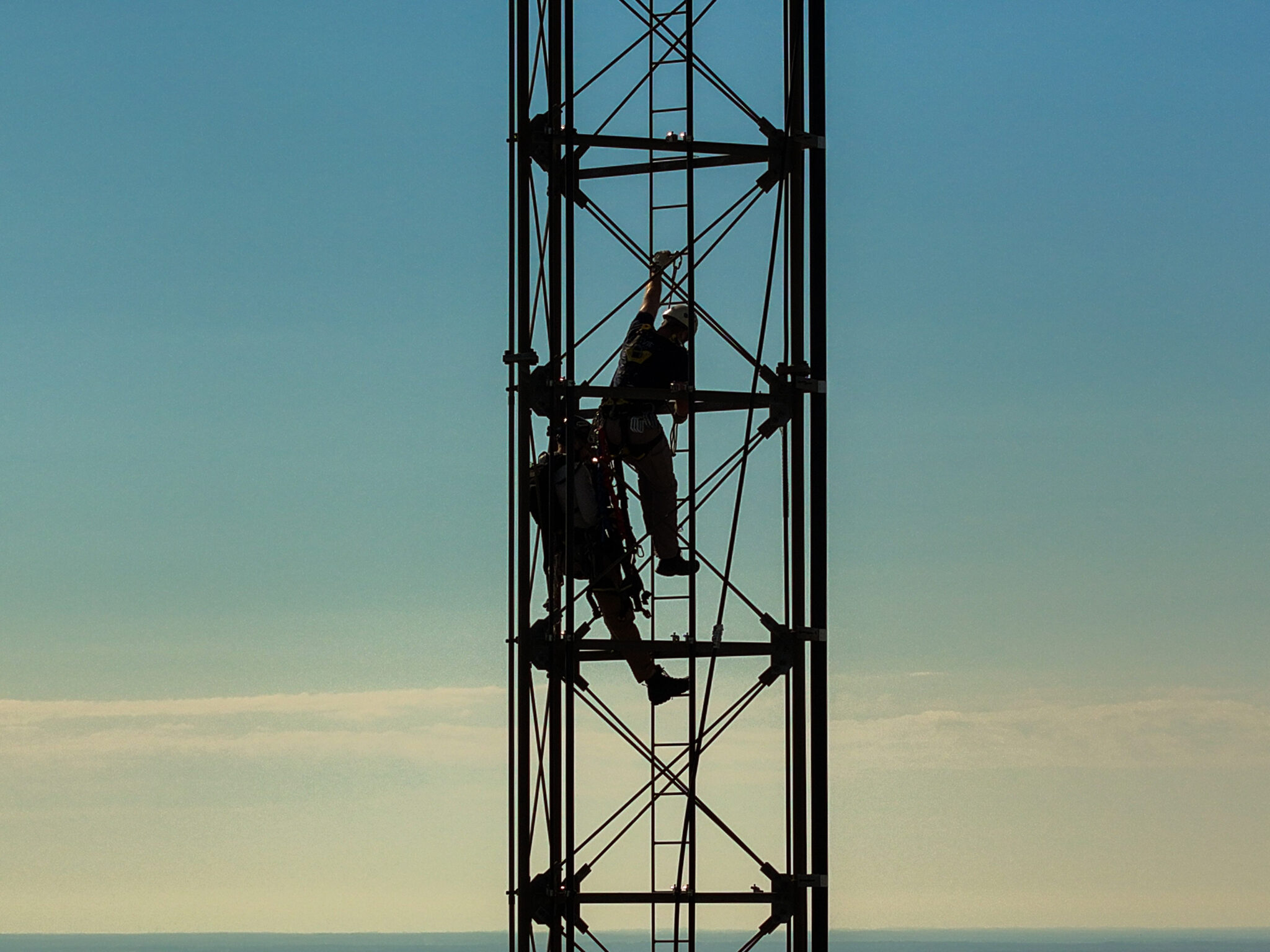
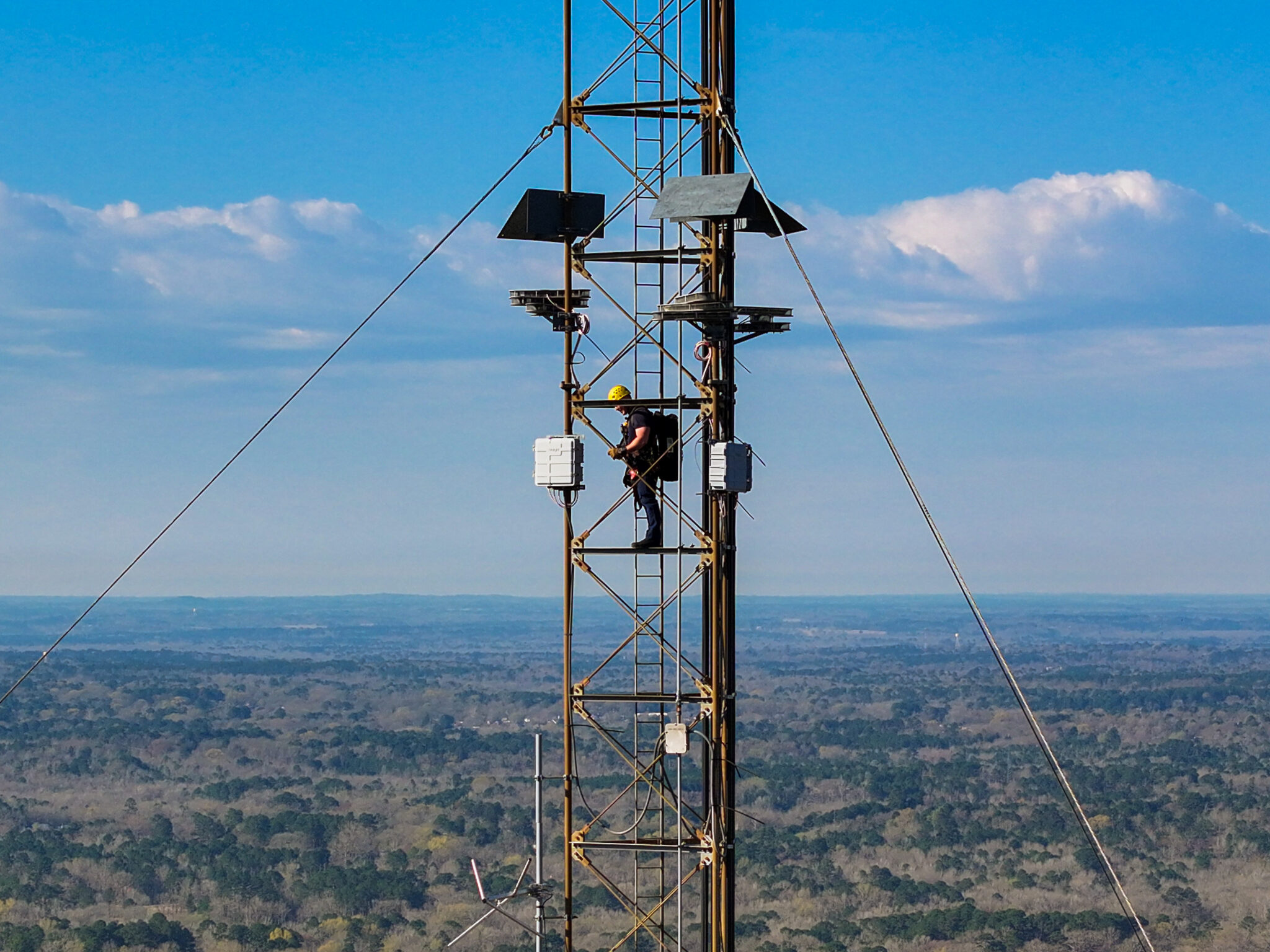
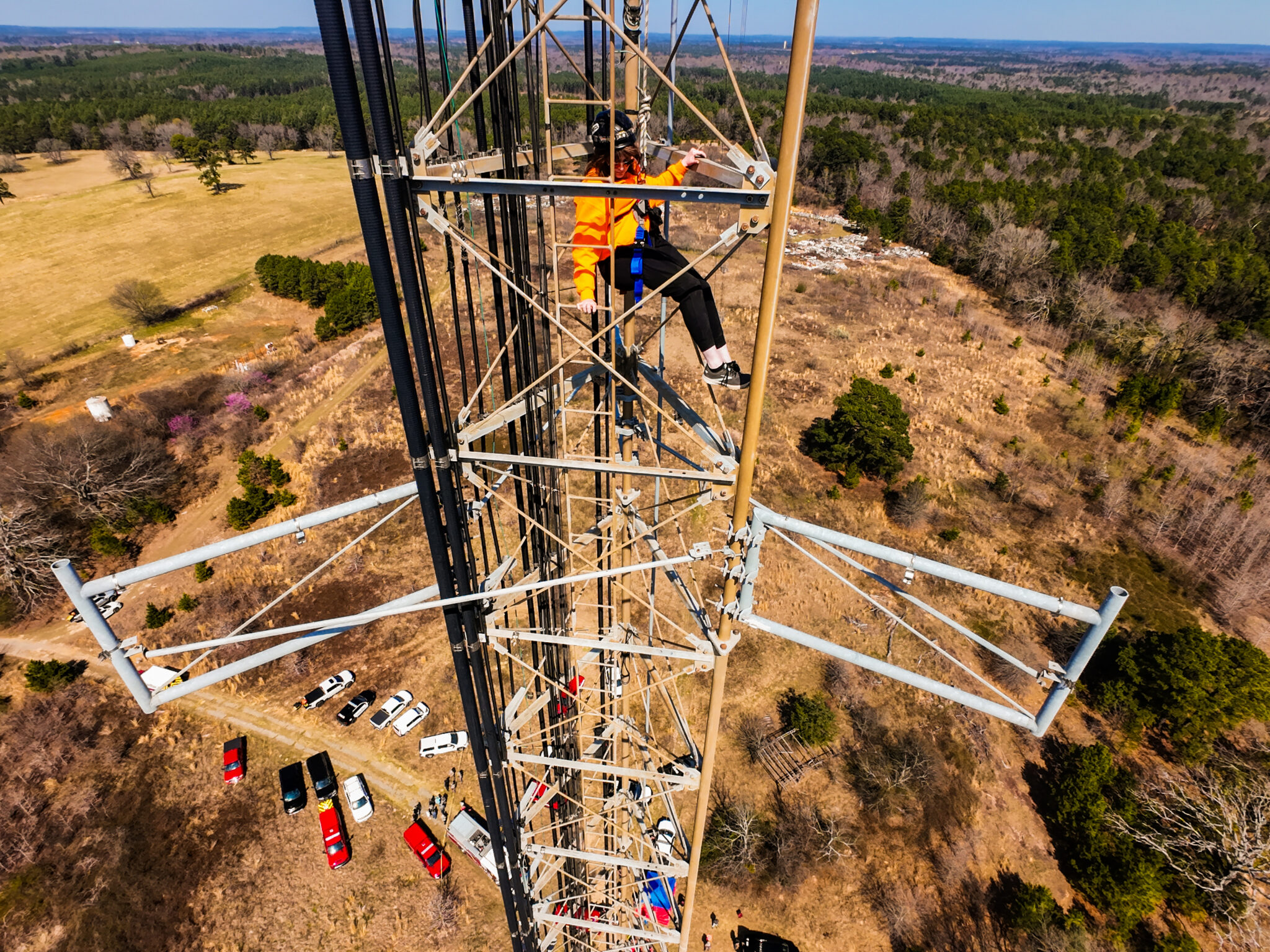
The inside of the tower, Robertson said, measured only about six to seven feet across in most places. A man standing inside it could touch either side with his arms spread. Yet this confined vertical space had to hold a complex rescue system involving 14 rescuers positioned at intervals up the tower.
The team divided into six groups, most of them two- to three-man teams, with equipment distributed so that everyone carried about the same weight. Three rescuers climbed all the way to the top, where they would eventually make contact with the balloonists and transfer them from the basket to the tower rescue system. King and Robertson were positioned in the middle section of the tower as part of the larger operation.
The first climber began the ascent at 8:51 a.m. It would take him one hour and nine minutes to reach the stranded balloonists.
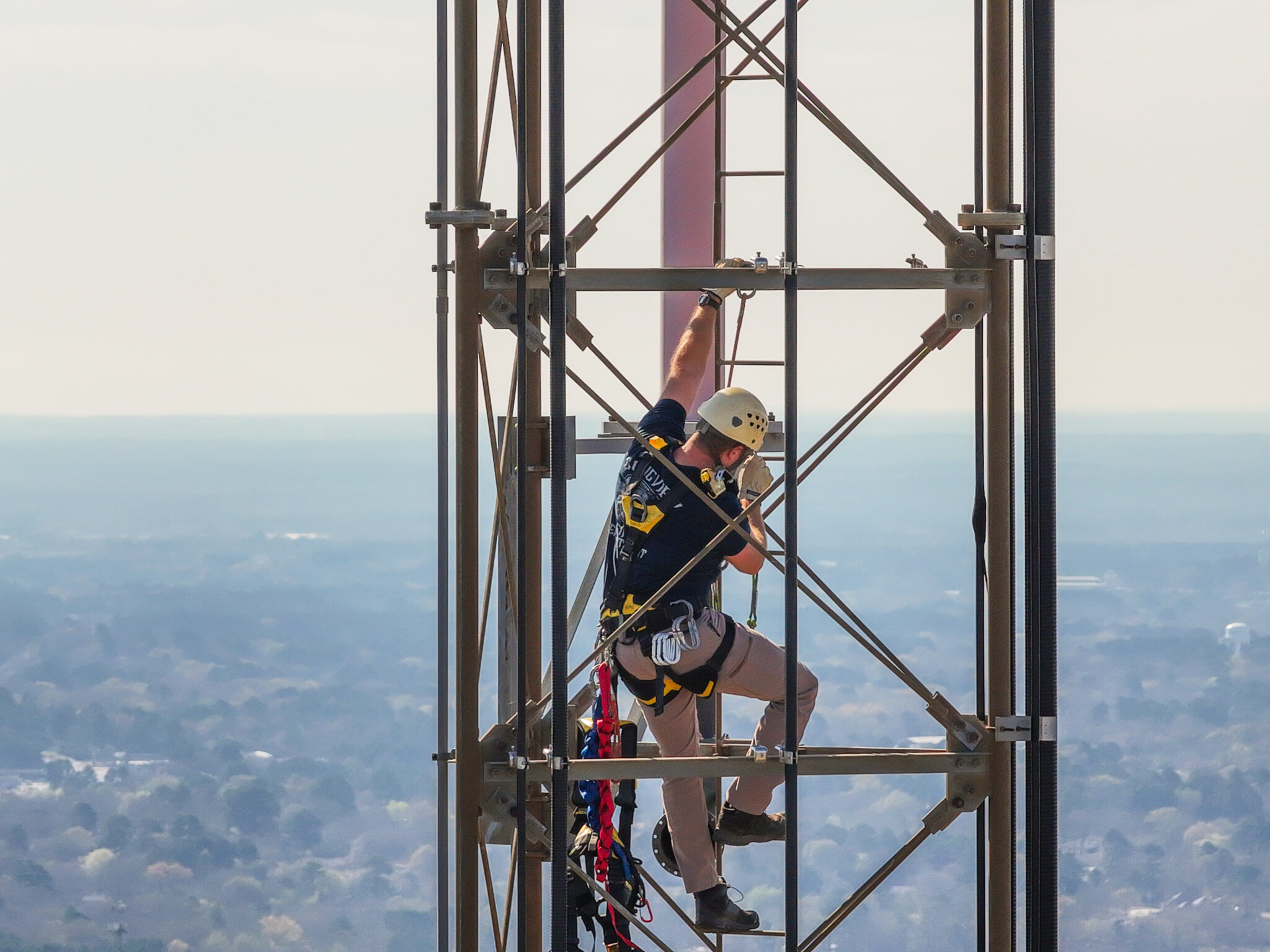
That climb was punishing. King said firefighters maintain a baseline level of cardio for the job, but no one specifically trains to climb 1,000 feet up a tower. The ladder itself was only about a foot wide, and cross braces often kept rescuers from being able to place their feet fully on it. Everyone climbed clipped in, moving upward with gear while the urgency of the situation pressed on them.
King said adrenaline helped carry them through. But both men made clear that physical effort alone was not enough. The mental side mattered just as much.
“The biggest thing is trusting the equipment and your training,” King said.
That trust had been built over years of rope work and repeated exposure to height. King said he and Robertson were also part of a rope competition team in Texas and had trained on cliffs, towers, and other demanding rope scenarios. None of that exactly replicated a 920-foot balloon rescue, but it helped prepare them psychologically to work high above the ground and rely completely on rope systems.
While firefighters climbed, one captain on the ground focused on a different but equally important job: keeping the balloonists calm. Robertson said the captain obtained their cell phone number and remained on the phone with them throughout the ordeal, giving updates and talking them through the long wait until rescuers could reach them.
At 10:00 a.m., the first rescuer reached the balloonists.
By then, the basket was still unstable. Robertson said the pilot had earlier tried to lasso the tower with a rope or tether to reduce the basket’s movement. Once the rescuers reached the top of the tower, they tossed ropes and lines to the balloonists, then anchored and tightened the lines to secure the basket to the tower and keep it from swinging in the wind.
Only after that stabilization could the most dangerous phase begin.
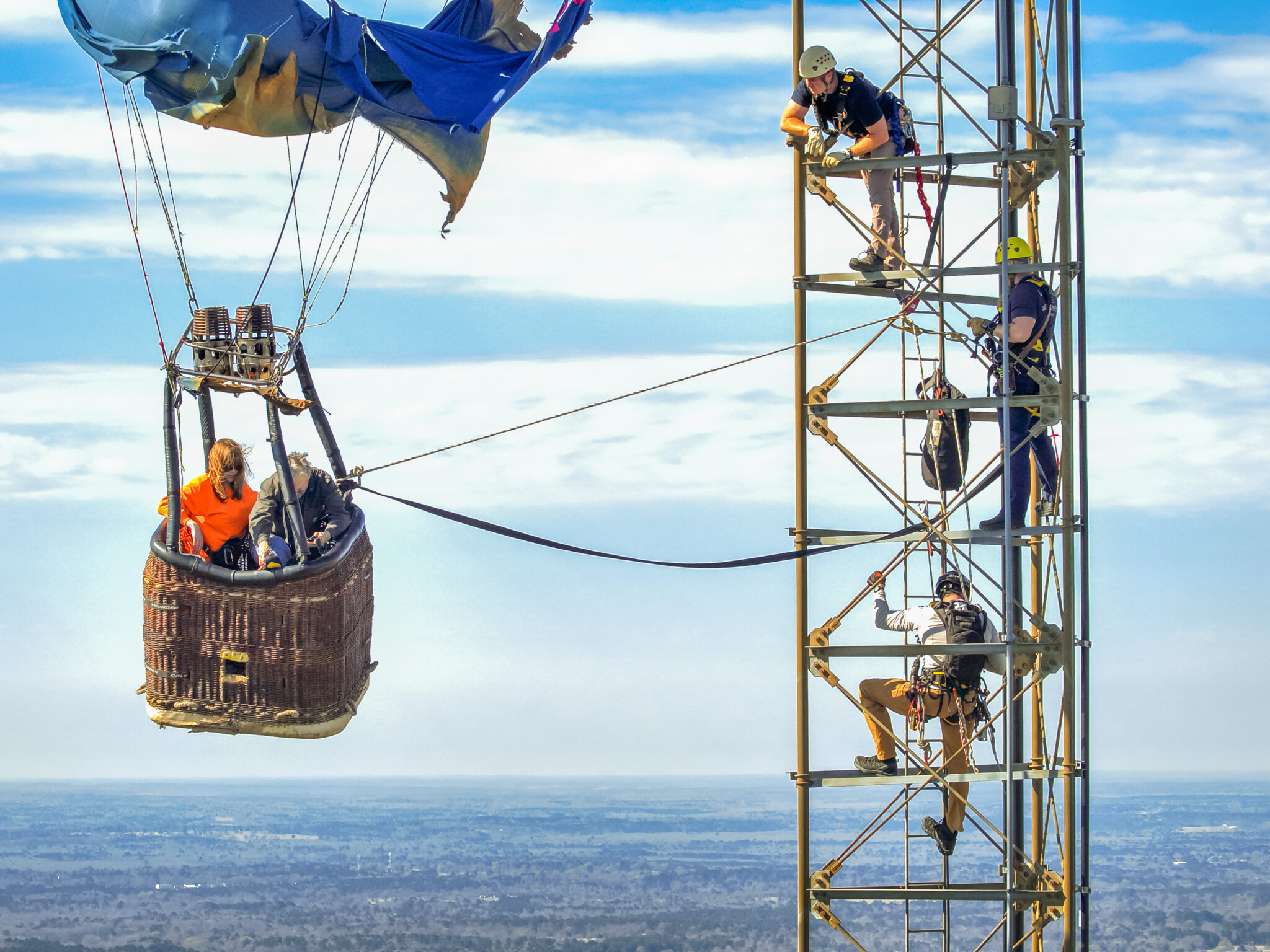
For King, the critical moment of the entire operation came when the balloonists had to leave the basket and trust the rope system that would carry them to the rescuers.
“Both victims being able to step out and trust that rope system to lower them over to the rescuers speaks a lot about them and their calmness in that situation,” he said.
That calmness mattered. King said both balloonists followed instructions well. At one point, the female survivor initially did not clip her leg straps correctly, but rescuers guided her through it and made sure everything was properly secured before moving her. Both remained cooperative and composed, which helped the rescue proceed more smoothly.
Had they been unable to step out, rescuers might have had to place one of their own into the basket to attach them directly, a far more complicated and risky option. From King’s perspective, climbing the tower was the only realistic rescue method. There was no backup plan. If the original rope arrangement had not worked, they would simply have had to devise another rope-based solution.
The first survivor was brought out of the basket at 10:46 a.m. The second followed ten minutes later, at 10:56 a.m.
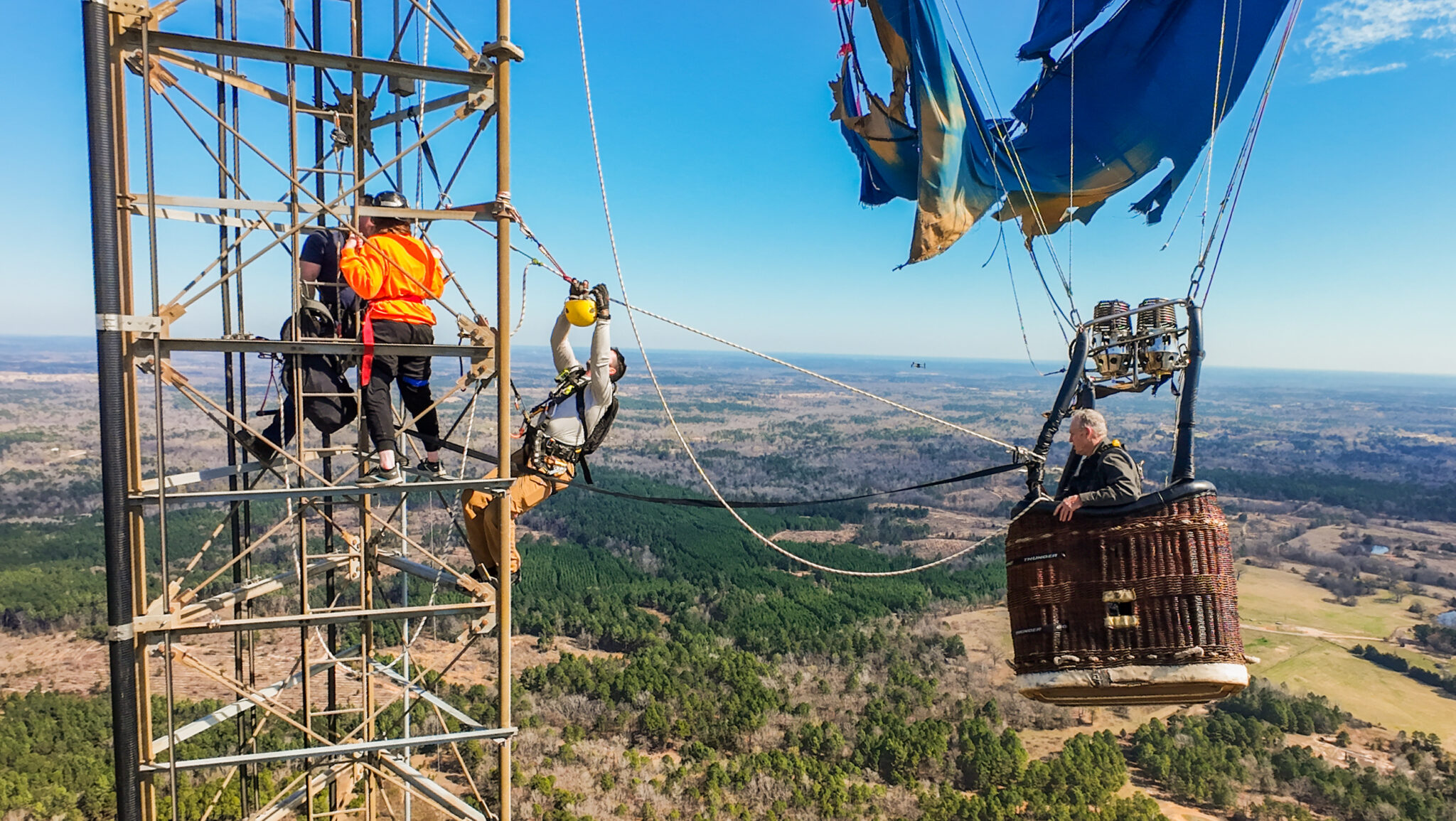
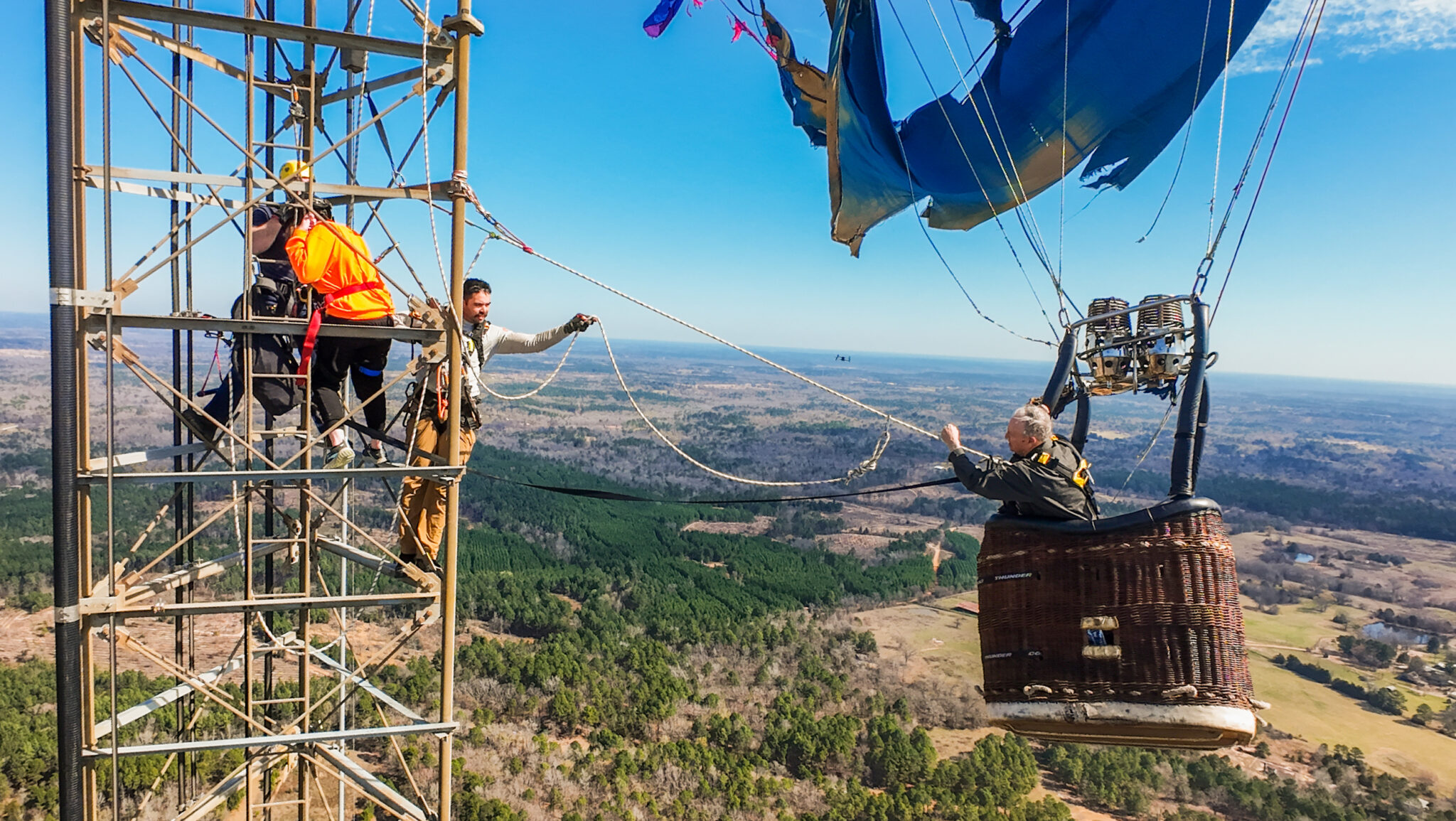
From there, the rescue entered another technically complex phase. Rather than lowering the victims all the way down on a single rope, the team used a staged relay system inside the tower. Robertson said the six rescue teams were stationed at intervals of about 200 to 300 feet, based on rope length. Each victim was placed in a full-body harness, and each team controlled descent with a lowering device known as the CMC Clutch. Drones and elevation calculations helped rescuers determine where the handoffs between teams would occur.
The victims were not climbing down on their own. They were attached to the rope systems while rescuers controlled their descent through the center of the tower. As one team neared the end of its rope, the next team clipped in, took over, and continued lowering.
The first survivor reached the ground at 12:24 p.m. The second reached the ground at 12:47 p.m.
But the rescue was not over for the firefighters themselves.
Both King and Robertson said the climb back down was actually harder than the climb up.
“The climb down was much more difficult than the climb up for me,” Robertson said. He explained that climbing down relied much more on grip strength and arms, which fatigue faster than legs. By then rescuers were also dealing with hunger, exhaustion, and cramping. King agreed, saying some of the firefighters cramped on the way down.
All rescuers were finally off the tower and back on the ground at 1:52 p.m. From the start of the climb to the point when both survivors were safely on the ground, the operation had taken three hours and 56 minutes.
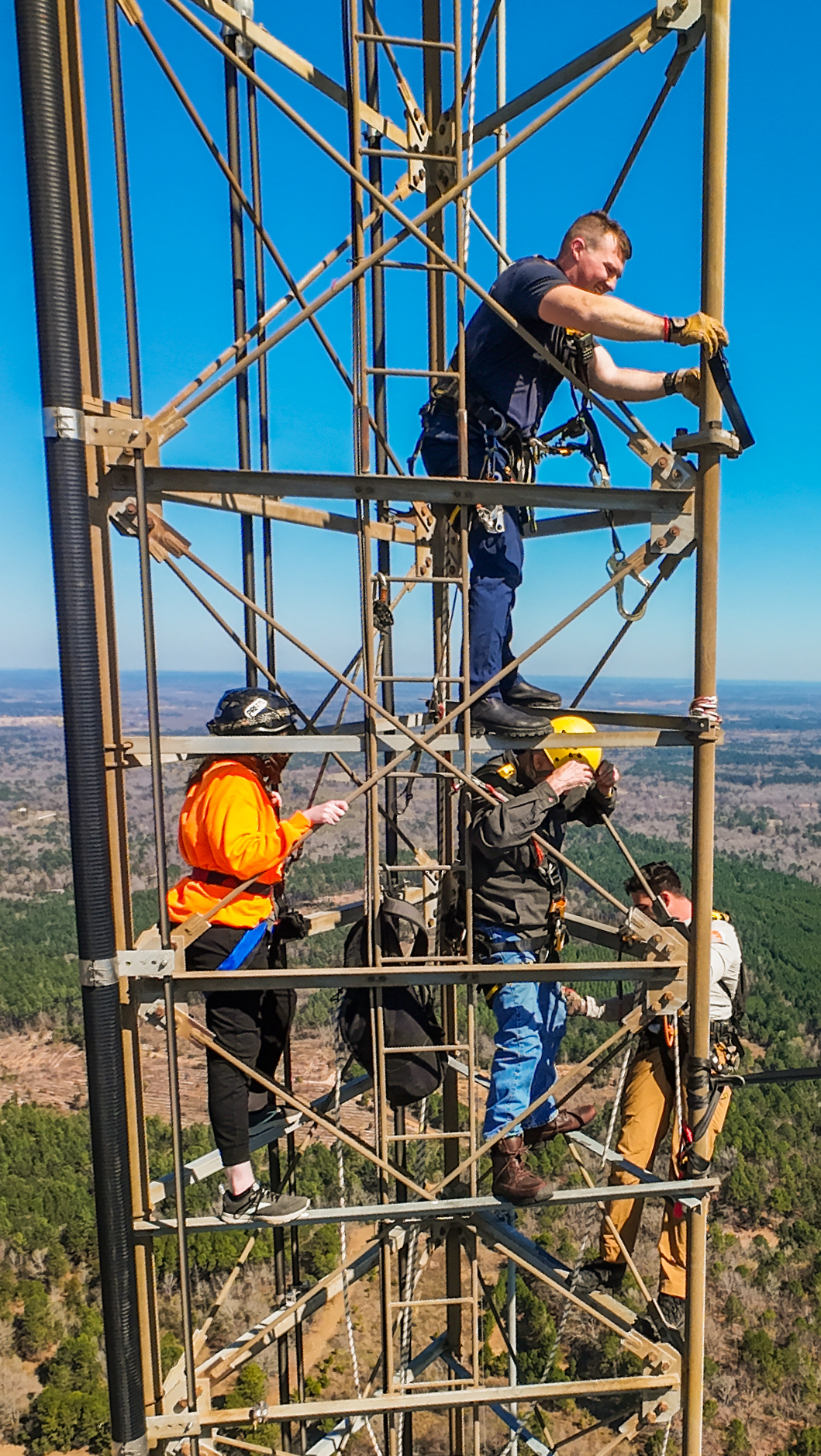
Despite the physical strain, none of the firefighters required hospital treatment afterward.
Asked what the experience had taught him, King answered with a touch of humor: more cardio. Robertson said much the same, adding that the rescue had humbled the team by showing just how physically demanding such a once-in-a-lifetime operation could be.
Neither man speculated on the cause of the balloon accident. King, who said he is not very familiar with balloon operations, noted only that it appeared to be a windy day and that the balloon may have been blown off course.
What stood out most in both men’s accounts was how much the rescue depended on preparation, trust, calm communication, and teamwork. At roughly 920 feet, the operation was likely the tallest and one of the most technically challenging rescues in the region’s history.
The City of Longview and the Longview Fire Department will hold a public appreciation event at the Maude Cobb Convention Center on March 31 from 5:30 to 6:30 p.m. to honor the rescue teams involved in the operation.